
What Makes a Great Swim Instructor? What Boulder & Louisville Parents Should Look For
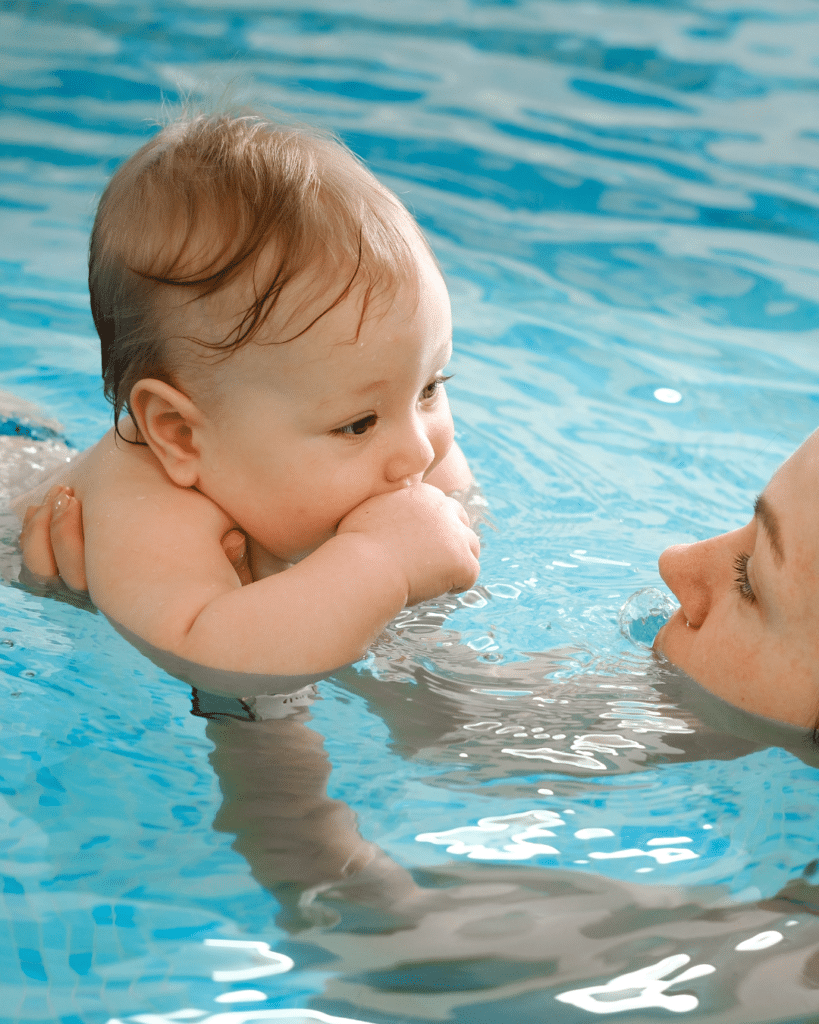
After more years of watching babies take their first lessons than I care to count, I can tell you the instructor matters more than the pool, the price, or even the curriculum written on paper. A skilled teacher can turn a nervous eight-month-old into a giggling little floater within a few weeks. The wrong fit will set a family back for months, sometimes longer.
Parents in Boulder and Louisville ask me this question all the time. They tour a facility, watch a class from the deck, and walk away unsure how to judge what they just saw. It’s a fair spot to be in. Certifications look similar on paper. Every school promises safety. Every website has photos of smiling kids. So how do you actually tell the good ones apart?
Here is what I have learned matters most, spoken plainly from someone who has hired, trained, and let go of instructors for a long time.
Patience Is a Skill, Not a Personality Trait
Any parent who has watched their child cling to the pool wall for six lessons in a row knows what real patience looks like. The instructors I keep on my team share a certain steadiness. They wait. They read a baby’s body language the way a good pediatrician reads a fussy newborn. They know when to gently nudge and when to pull back completely and try again next week.
If you watch a class and the instructor seems frustrated, rushed, or checked out when a child cries, that is your answer. Move on.
Real Certifications, Not Framed Ones
Anyone can hang a certificate on a wall. What I want to know is when the instructor last renewed it. Current CPR, First Aid, and lifeguard credentials from a reputable body should be the floor, not the ceiling. Ask specifically what infant water safety training the instructor has completed. If the answer is vague, that tells you something.
Water for babies is a specialty. It is not the same as teaching a seven-year-old to swim freestyle. The person holding your six-month-old should have training that reflects that difference.
Communication That Goes Both Ways
Good instructors talk to babies. Great ones also talk to parents. Every family should leave a lesson knowing three things: what their child worked on today, what they struggled with, and what to practice at home before the next session. If the only feedback you ever get is “she did great,” ask more questions. If those questions still land nowhere, you have a communication problem.
I train our team to give parents something specific after every class. Even a sentence or two. Little kids progress in small steps, and if you can’t see those steps, the whole thing starts to feel like a very expensive bath time.
They Actually Make It Fun
Babies do not respond to instructions. They respond to songs, silly voices, funny faces, and the same goofy game played forty times without a single sigh of boredom. If you sit deck-side and the instructor looks tired or flat, so will your child within about ninety seconds.
The best teachers I know bring genuine energy to every class. Not manic, cheerleader energy. Just warm, playful, real engagement. You can spot it in the first thirty seconds of watching them work.
What Boulder and Louisville Families Should Think About Specifically
Our kids are not growing up around the same water conditions as kids in Florida. Colorado children are more likely to end up at a mountain reservoir, a backyard pool with genuinely cold water, or a family lake day than at a warm ocean shore. A good local instructor understands that.
For our Swimming Lessons for Babies and Toddlers in Louisville CO, we spend real time on comfort with cooler water and clear survival skills like rolling to a back float and finding a wall. The same is true of our Swimming Lessons for Babies and Toddlers in Boulder CO. It is not enough to teach a baby to kick. They need to build the reflexes that keep them safer in the water they will actually encounter here.
Ask any school you tour how they prepare children for the local environment. If they only talk about pools, they are missing half the picture.
Why We Recommend Private Lessons Until Your Child Can Really Swim
This one gets a little strong opinion from me, but I stand by it after years of seeing what actually works.
Until a child can swim across our small lesson pool independently and take a side breath along the way, private lessons are what we recommend. Every single time. Kids progress faster in a one-on-one setting because the instructor’s attention doesn’t split. Every minute of class is spent on your child, adjusted to your child, and paced to your child. That focus adds up in a way group classes simply cannot match at the beginner and early-intermediate stages.
Once a child hits that swim-across-the-pool milestone with independent side breathing, our small group ratios of four kids to one teacher become a great fit, and eventually the swim team classes are where they land. The one exception on the early end is our Parent and Baby program, which is a group class by design. That format runs up to about seven babies with one teacher, and it works because the parents are in the water doing most of the hands-on holding and support. It is really a parent-education and water-acclimation setting more than an independent skill class.
If a swim school pushes new little swimmers straight into group lessons without private instruction first, I’d ask why. There are usually cheaper reasons than better ones.
What to Watch on Your Trial Visit
When you visit a swim school, don’t just watch the instructor. Watch the babies. Do they seem relaxed? Are they smiling at least some of the time? Are parents in the water with confidence, or do they look confused about what they are supposed to be doing?
Then watch how the instructor handles the one baby who is having a hard day. That single moment will tell you more about the school than any brochure ever could.
Come Meet Our Team at Blue Dolphin Swim School
I built Blue Dolphin because I wanted the kind of swim school I would trust with my own family. Our instructors are trained, credentialed, warm, and genuinely good at what they do. We keep our water at a comfortable 92 degrees and our focus firmly on the skills that keep babies safer in every kind of Colorado water.
We serve families in Boulder, Louisville, Arvada, Broomfield, Superior, Erie, Thornton, Lafayette, Westminster, and the surrounding communities. If you have been thinking about lessons for your little one, come see us in action.
Learn more about our program on our Baby Love Infant Swim page, or register today to reserve a spot before our next session fills up.
Frequently Asked Questions
At a minimum, current CPR and First Aid credentials from a recognized organization, plus lifeguard training or an equivalent water safety certification. Beyond that, look for specific infant and toddler training. Teaching babies is a distinct skill set, and the best instructors have coursework or mentorship focused on this age group.
For most kids, private lessons are the right starting point. We recommend private instruction until a child can swim across our small lesson pool on their own with a side breath. The one-on-one focus produces faster progress and stronger skill foundations. Our Parent and Baby program is a group class by design, but that setting is really about parent-guided water acclimation rather than independent skill work.
Watch your baby’s face and body during class. Relaxed shoulders, eye contact, smiles, and willingness to try new activities are all good signs. Some tears are normal, especially in the early lessons, but a baby who consistently seems calm and curious around a particular instructor is telling you something important.
Not necessarily. Crying is a common phase, and many babies work through it within four to six lessons. That said, if you feel your child’s fear is getting worse rather than better, or if the instructor is not adjusting their approach to meet your baby where they are, it is worth having a direct conversation with the school. A good school will welcome that feedback and adjust.
Once children graduate from private lessons and can swim independently across our small lesson pool with a side breath, our group ratio is four students to one instructor, and it stays that way until they move up to swim team classes. Our Parent and Baby group classes run up to about seven babies with one teacher, which works because parents are actively participating in the water alongside their child.
As long as your child is making progress, feels safe, and enjoys going. Consistency matters at this age. Babies build trust with familiar faces and predictable routines, so switching schools too often can slow things down. If you are happy with the instruction, the communication, and your child’s growth, stay put.