
The Two-Inch Rule: How Shallow Water Can Still Be Dangerous for Little Kids
Every parent who walks into our swim school knows to be careful around pools. That part is instinctive. What surprises people, and what I find myself repeating almost every week, is this: a young child can drown in about two inches of water. Not two feet. Not two arm-lengths. Two inches.
I’ve watched the color drain from a parent’s face when I share that number for the first time. It sounds impossible until you understand why it’s true. And once you do, the way you look at your home changes a little. The mop bucket in the garage. The half-forgotten kiddie pool on the patio. The dog’s water bowl by the back door. Suddenly all of it feels different.
That’s not a bad thing. That’s awareness, and awareness is what keeps kids alive.
Why Two Inches Is Enough
The reason shallow water is so dangerous for very young children has almost nothing to do with the water itself. It has to do with the child’s body and how they respond to being face-down in something wet.
Infants and toddlers are top-heavy. Their heads are enormous relative to the rest of their bodies, and their core strength has not caught up yet. When a small child tips forward into a bucket, a water table, or an inch of water in a bathtub, they do not have the neck strength or the shoulder muscles to push themselves back up. That geometry alone accounts for more incidents than most parents realize.
Then there is the reflex problem. Adults picture drowning as a struggle. In real life, especially with young children, the response looks almost the opposite. A toddler who slips face-down into water often freezes. No thrashing. No calling out. No sound at all. Drowning is silent, and in a child under three, it can happen in under thirty seconds.
Put those two things together and the picture becomes clear. It is not the depth that hurts a child. It is their inability to lift themselves out of what should have been a harmless situation.
The Household Hazards Most Families Overlook
Every family I meet spends significant time thinking about pool safety. Fences, life jackets, arm’s reach rules, all of it. What often gets missed is the everyday water inside the home and yard, the kind that never registers as a hazard because it doesn’t look like one.
Here are the ones I bring up most:
Inflatable kiddie pools. These are wonderful on a hot Colorado afternoon. The problem is what happens after playtime ends. The pool is heavy to drain, so it often sits full overnight. A toddler who wanders out the back door the next morning finds it waiting. Drain it every single time. Flip it over so rainwater can’t refill it.
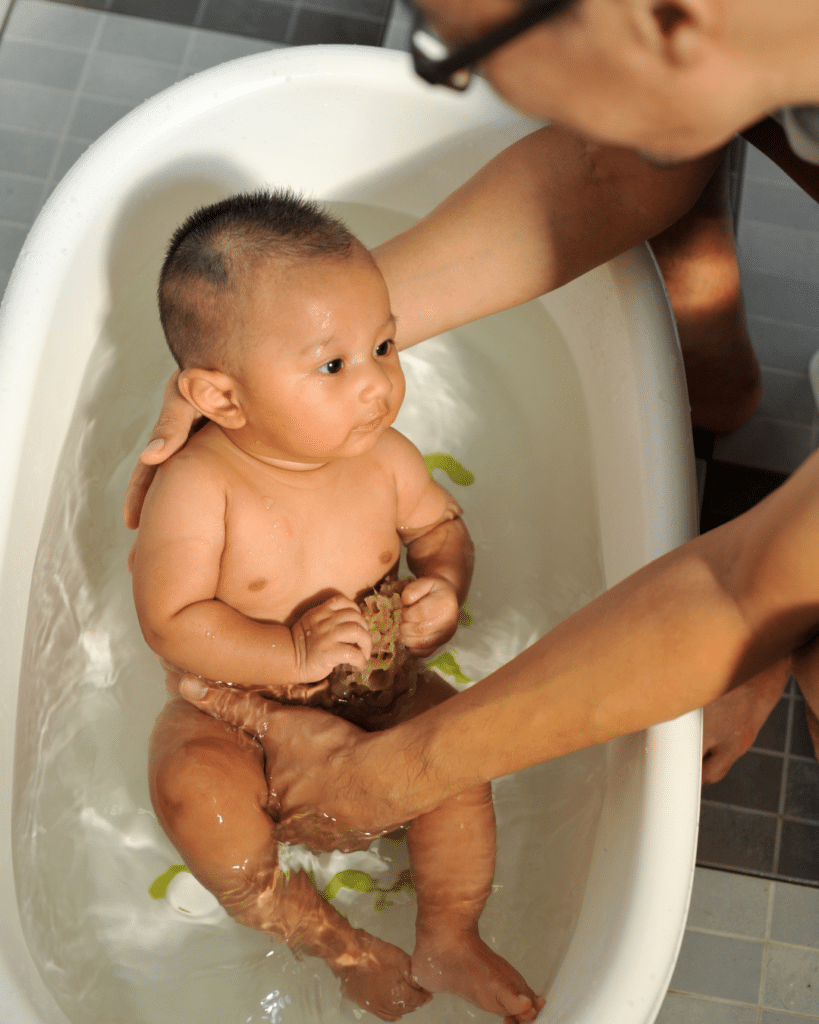
Bathtubs. This is the big one. Bath time feels routine, which is exactly what makes it risky. Parents step away to grab a towel, answer the door, or check on another child, and thirty seconds is all it takes. Touch supervision, meaning your actual hand on your child, is the standard for infants and toddlers.
Five-gallon buckets. These are the ones parents almost never think about. The base is heavy when full, so the bucket does not tip when a curious toddler leans into it. Instead, the toddler tips in. Never leave standing water in a bucket, mop pail, or utility container. Store them upside down.
Toilets. A toddler leaning over the rim to investigate can lose their balance and go in head-first. Toilet lid locks are inexpensive and take about two minutes to install. Keep bathroom doors shut when the room is not in use.
Water tables and outdoor toys. Water tables get treated like play equipment, which means supervision often relaxes. Empty them after playtime, and stay close during it. The same goes for puddles, drainage areas, and low spots in the yard after a rainstorm.
Pet water bowls. Yes, really. For crawling babies, a full dog bowl on the kitchen floor is worth being aware of.
The Rules That Cut the Risk Down
None of this is meant to make parents paranoid. It’s meant to give you a working checklist that fits into a normal life. A few habits handle most of the risk.
Assign a Water Watcher whenever kids are around any water, indoors or out. One adult. No phone, no book, no long conversations. Just eyes on the water.
Practice touch supervision for children under three. Arm’s reach isn’t quite enough at this age. Your hand on their body, or theirs on you, is the standard that actually keeps them safe.
Learn infant and child CPR. This one gets postponed constantly. I understand why. Life is busy and CPR classes feel like something you can always do next month. But in the seconds between an incident and the arrival of first responders, a caregiver who knows CPR is the person who determines the outcome. The classes take an afternoon. Take the afternoon.
Secure the environment. Safety gates at bathroom doors. Latches on the laundry room. A fence around the backyard water feature. Every barrier you add is one more layer of protection between your child and something they cannot yet recognize as dangerous.
Teach real skills as early as your child is ready. This is where swim lessons come in. Babies who learn to hold their breath, roll onto their back, and stay calm in unfamiliar water have a genuine advantage if something unexpected happens.
Building Real Water Safety Skills at Blue Dolphin Swim School
Awareness at home is one layer. Skills in the pool are another. Together, they give your child a real chance if something goes wrong, and they give you a lot more peace of mind in the meantime.
Blue Dolphin Swim School serves families across Westminster, Arvada, Broomfield, Superior, Erie, Thornton, Louisville, Lafayette, Boulder, Denver, and the surrounding Colorado communities. Our Baby Love Infant Swim programs teach the exact breath control, back-floating, and recovery reflexes that turn a scary moment into a survivable one.
Learn more on our Baby Love Infant Swim page, or register today to get your little one started before the busy summer season fills up.
Frequently Asked Questions
Yes. The risk isn’t about the depth of the water. It’s about the child’s ability to lift themselves out of it. Young children have heavy heads relative to their body strength and often freeze when they end up face-down. That combination is what makes even a shallow puddle a genuine hazard for infants and toddlers.
Touch supervision means an adult keeps a hand on the child at all times when they are in or near water. It is stricter than arm’s reach and is the standard recommended for infants and toddlers, especially during bath time. The idea is that if you have to look away for even a moment, your hand is still there to prevent a slip.
They can be, with the right precautions. Kiddie pools require the same active supervision as any other body of water. The most important rule is to drain them completely after every use and flip them upside down so they cannot collect rainwater. Never assume a shallow pool is a low-risk pool for a child under five.
Children between one and four years old face the highest risk. This age group is mobile enough to reach water on their own, curious enough to lean into it, and physically not yet developed enough to catch themselves if they slip. Drowning is a leading cause of accidental death in this age range for exactly this reason.
Yes. Infant and child CPR classes are widely available through the American Red Cross, local hospitals, and community centers, and most take just a few hours. In a drowning incident, the moments before emergency responders arrive are critical, and a caregiver who knows CPR gives their child the best possible chance.
Swim lessons build the reflexes that matter in an emergency. Children who learn to hold their breath when their face touches water, roll onto their back, and stay calm in unfamiliar situations are far better equipped to handle a fall into water than those who have not. Lessons are one layer of a bigger safety strategy that also includes supervision, barriers, and CPR readiness.