How do I rejoin Masters after a long break without getting injured?
A practical, phased return plan for adult swimmers who left Masters training for months or years. Covers pre-practice mobility and strength, how to tell your coach your limits, a cautious three-week volume progression, warning signs to slow down, and when to ask for modified sets.
Updated
pre-practice mobility and strength
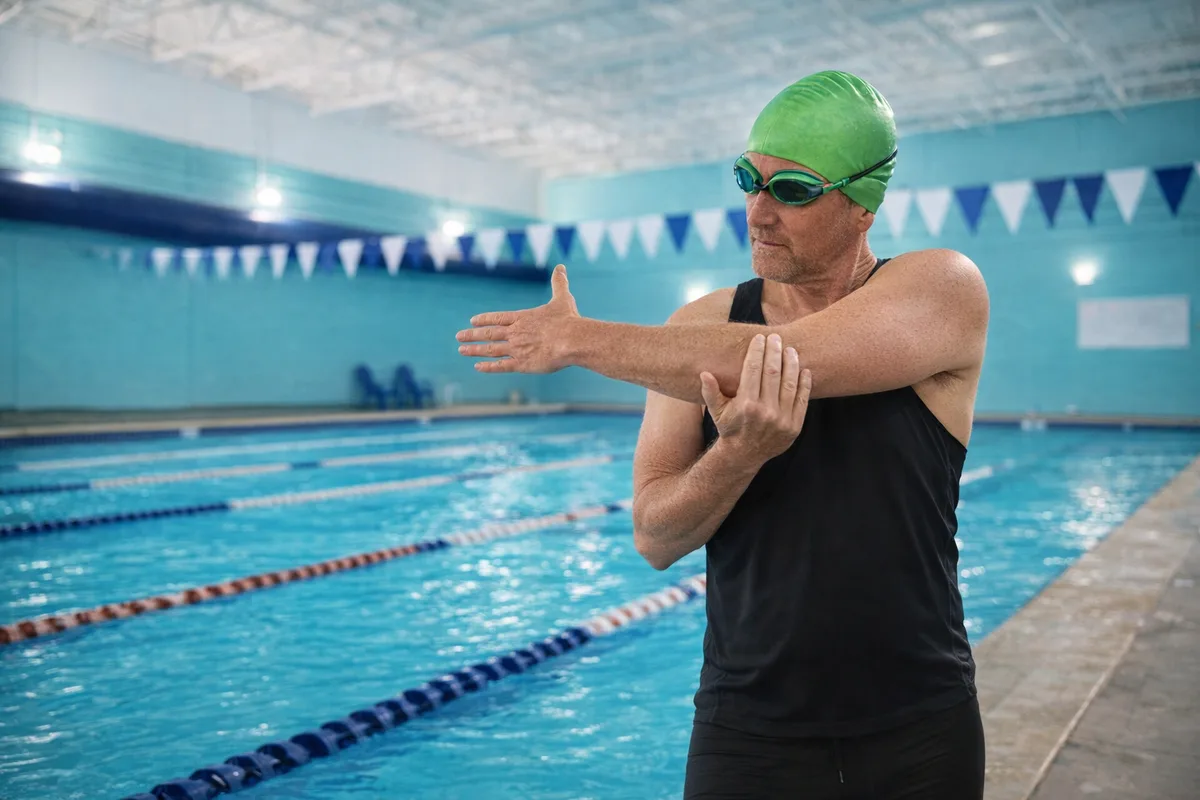
Before your first Masters practice back, spend a few short sessions rebuilding joint range and basic swimming-specific strength on land and in water. Focus on controlled mobility for shoulders, hips, and ankles, plus light activation of the rotator cuff and core. These sessions lower abrupt load when you re-enter the pool and help you feel more stable during sets.
- daily 10–15 minute mobility routine: shoulder circles, thoracic rotations, hip flexor stretches, ankle mobilizations
- twice-weekly light strength: bodyweight rows/pull-aparts, band external rotations, glute bridges, single-leg balance
- pool-based prep: easy 200–400 m continuous swim focusing on smooth tempo and technique before practice
- use breath-controlled drills and slow kicking sets to build endurance without heavy shoulder loading
communicating limits to your coach
Clear, concise communication helps your coach place you in an appropriate lane and modify sets if needed. Tell your coach how long you were away, any lingering niggles, and your current weekly time availability. Ask for simple markers they can use—percentage of max effort, reduced distance, or extra rest—so you and the coach share expectations during practice.
- explain recent training history in one paragraph: last regular practice, cross-training, injuries
- request an agreed-upon intensity marker, e.g., 'I’m at 60–70% of my usual effort for now'
- ask to be given send-offs or modified distances rather than full-intensity repeats in week one
- offer to do technique or drill-focused options as an alternative to full sprint sets
sample three-week volume progression
A gradual, three-week progression helps you rebuild aerobic base and neuromuscular readiness without a large injury risk. Use percentages of your previous typical yardage if you know it; if not, start conservatively. Each week increase total distance by roughly 15–25% and keep at least one technique-focused session per week. Prioritize recovery between sessions.
- week 1 (reintroduction): 2–3 sessions, low volume—about 30–50% of your old weekly distance; focus on drills, timed easy sets, and 8–12 minute warm-up
- week 2 (build): 3 sessions, increase to 50–70% of prior volume; include one moderate main set with extra rest and a technique set
- week 3 (stabilize): 3–4 sessions, 70–90% of prior volume depending on how you feel; introduce one shorter intensity set but keep volume controlled
- daily recovery: sleep, hydration, light mobility and optional easy spin or walk on rest days
Make it practical
Your swim-bag checklist
An optional starting list. Check the school’s requirements before your visit. Your checks last while this page is open.
0 of 6 items checked
warning signs to slow down
Pay attention to objective and subjective signals that you’re doing too much too soon. Sharp or worsening joint pain, persistent stiffness that doesn’t ease with warm-ups, suddenly poor technique under light loads, or unusually high fatigue the day after practice are all reasons to reduce intensity. Track these signs and act early to avoid longer setbacks.
- new sharp pain in a joint during or after sets—stop and report to coach
- inability to maintain basic stroke mechanics at easy effort
- excessive soreness lasting more than 72 hours or disrupting sleep
- marked drop in resting energy, mood, or appetite compared with pre-training baseline
when to request a modified set
Request a modified set when your body tells you limits, or when your planned intensity would exceed your current capacity. Typical moments include first few practices back, days after a long commute or a poor night’s sleep, or if you notice technique breakdown. A coach or lane partner can provide reduced distance, extra rest, or drill alternatives.
- ask for shorter repeats (e.g., halve repeat distance) or fewer repeats per set
- request increased rest intervals (an extra 10–30 seconds) to preserve technique
- offer to swap some reps for drill-based or kick-focused options to reduce shoulder load
- use a simple phrase with your coach, e.g., 'can I do the shorter option today?'
tracking and adjusting progress
Keep a simple log of each practice: duration, approximate distance, perceived exertion, and any pain or mobility notes. Review trends weekly with your coach or on your own and adjust the plan if fatigue or pain accumulates. Small, consistent gains are preferable to rapid jumps—prioritize sustainability and consistent attendance over brief high-volume spurts.
- record: date, session focus, estimated distance, RPE (1–10), and any niggles
- use weekly summaries to decide whether to repeat a week, step back, or progress
- schedule a short check-in with your coach after week three to plan next phase
- consider cross-training low-impact cardio and continued mobility work on non-pool days
Pause & put it together
A quick learning check.
Questions you might have
how long should i wait before increasing intensity more aggressively?
Increase intensity only after you’ve demonstrated consistent recovery and solid technique for several sessions at your current workload. For many returning swimmers this takes 3–6 weeks depending on prior fitness, age, and time away. Use small weekly increases and monitor sleep, soreness, and performance to guide pacing rather than a fixed timetable.
i'm worried about my shoulders—what low-risk pool options can i choose?
When shoulders feel vulnerable, emphasize swimming drills, kicking sets, and lower-intensity aerobic swims that keep the arms moving in controlled ranges. Pull sets can be reduced or replaced with paddles-free technique work and buoy-supported kicking. Communicate this preference to your coach and request alternatives during upper-body intensive sets.
should i do land strength sessions while returning to the pool?
Yes—short, focused land sessions two times per week that target shoulder stabilizers, posterior chain, and core can support a safer return. Keep loads modest, prioritize control and quality of movement, and avoid large, high-impact sessions the day before pool practices to reduce cumulative fatigue.