How can I learn efficient freestyle breathing as an adult beginner?
A step-by-step, in-pool progression focused on breath timing, head position, and simple drills you can practice under supervision or with a coach. Includes entry-level cueing, progressive drill sets to reduce breath-holding, and clear language to use with an instructor so lessons match your comfort level.
Updated
why breathing matters and lesson rules
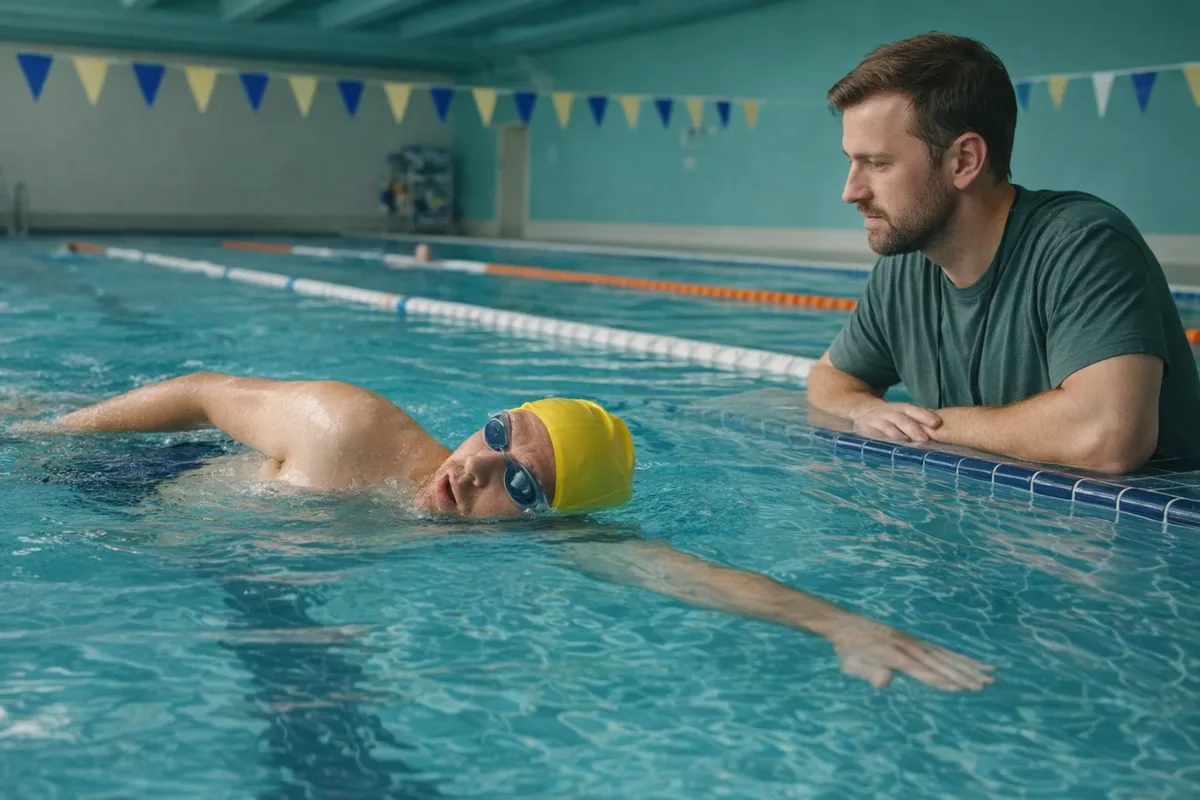
Learning to breathe in freestyle is about timing, relaxation, and consistent practice with feedback. Before trying any in-water breathing drills, agree with your instructor that all exercises will be supervised. Do not attempt submersion, immersion, or breath-management drills alone; discuss your comfort, water confidence, and any medical concerns with the teacher first.
- Tell the instructor your current comfort level with face-in-water and any worries you have about breathing or panicking.
- Agree on a clear stop-signal and check-ins during the lesson (simple cue to pause or tread water).
- Confirm the instructor’s plan includes gradual exposure and regular opportunities to rest at the wall.
basic concepts to understand before you enter the water
Three simple ideas make the rest easier: exhale in the water, inhale quickly to the side, and keep the head aligned with the spine when you turn. Understanding those concepts on land and in shallow water helps reduce surprise in deeper practice. Describe any breathing patterns that upset you so the instructor can adapt cues and tempo.
- exhale continuously and gently while your face is in the water (nose or nose+mouth), rather than pausing until you turn to breathe.
- turn your head to the side, not lifting it forward; think of one goggle in and one goggle out.
- focus on a low, compact inhale—quick and relaxed—then return your face to the water while resuming exhalation.
head position and body alignment for easier breaths
A stable, streamlined body and a small, controlled head rotation make breathing easier and less disruptive to rhythm. Emphasize a neutral head line and gentle rotation from the torso rather than lifting the chin. Let your instructor watch and offer a single cue at a time so you can work on one adjustment without overload.
- think neutral: eyes looking down and slightly forward, not straight ahead; this promotes a flat body line.
- rotate your chest and hips with the stroke to bring the mouth to the surface, instead of lifting your head.
- use gentle rotation landmarks: shoulder leads the turn, head follows; avoid torqueing the neck.
a progressive in-pool drill plan
This progression is for use during lessons with a qualified instructor. Start in shallow water to practise relaxed exhalation and side breathing, then increase range and add short freestyle swims. Each step builds confidence in keeping exhalation while your face is submerged and timing the inhale on a compact head turn.
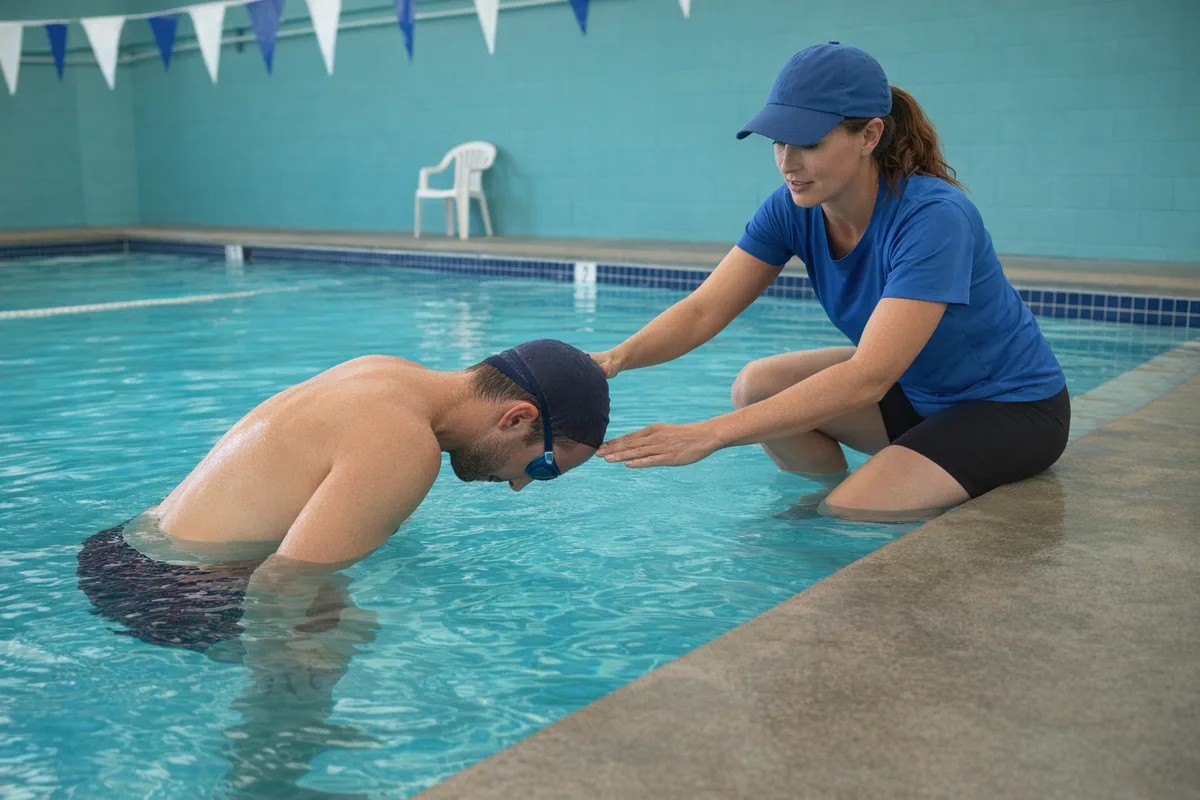
- step 1 — standing exhale practice: stand in shallow water with face submerged and practise a steady, audible exhale through the nose and mouth for several breaths while supervised.
- step 2 — side-breathing float: hold a kickboard or poolside with body horizontal, practise turning your head to inhale while exhaling into the water between breaths.
- step 3 — single-arm freestyle with breathing: using one arm to stroke, breathe to the side on the stroking side while the other arm supports rhythm; alternate sides with breaks.
- step 4 — short swims with recovery: perform 10–15 metres of relaxed freestyle with a focus on exhale-underwater and a quick inhale to the side, then rest at the wall and review with your instructor.
how to progress sets and when to give feedback to your coach
Progression should be driven by your comfort and the instructor’s assessment. Increase distance or add continuous bilateral breathing only if your coach observes controlled exhalation and steady body alignment. Use clear, non-technical language when you give feedback so the coach can adapt the next set to your breathing needs.
- ask for short blocks of practice with clear rest after each attempt so you can reflect and breathe normally between repetitions.
- request specific, single-point cues (for example: 'keep the chin down' or 'turn from your ribs') rather than long lists.
- if something feels uncomfortable, tell your instructor immediately and ask for a regress to an earlier drill or a different cueing approach.
common challenges and easy cues
Adult beginners often tighten up, lift the head, or hold breath when they feel rushed. Simple, repeatable cues can help: 'soft exhale', 'one goggle out', and 'rotate from the chest'. Share which cues help you and which confuse you so the instructor can tailor language that works with your movement patterns.
- tension and hurried inhales: try 'slow mouth out, quick mouth in' as a practice cue during supervised work.
- head-lift: ask for tactile feedback or a single visual cue from your coach to remind you to keep the chin low.
- asymmetry: if you only breathe to one side, discuss with the instructor whether alternating sides might help your balance and comfort.
Pause & prepare
Take three questions to your next lesson
Think through each question and check it when you have something to discuss. This is a conversation prompt, not a readiness test.
0 of 3 questions considered
Questions you might have
how often should i work on breathing in lessons?
Focus on consistent, short exposures during lessons rather than long, infrequent sessions. Practise breathing-focused drills every lesson if possible, with variations your instructor selects. Discuss frequency with your coach so they can integrate small breathing sets without overloading other skill work or conditioning components.
is bilateral breathing necessary for beginners?
Bilateral breathing (breathing on both sides) is not required as an initial goal. Early priorities are relaxed exhalation and a compact inhale to the side. Talk with your instructor about whether and when to introduce breathing on the opposite side based on your balance, comfort, and stroke control.
what should i tell an instructor before my first breathing-focused lesson?
Share your water experience, any moments of panic, and specific fears (for example, uncomfortable submersion or difficulty exhaling underwater). Mention any medical issues that affect breathing. Ask the instructor how they will progress drills, where you can rest, and what stop-signal you'll use if you need a break.