How Infant Swim Lessons Help Prepare Families for Summer Water Activities
5 min read
By Blue Dolphin Swim School
Your learning focus
A clearer picture before the next step.
Early swim instruction helps babies build water confidence, learn foundational safety skills, and develop coordination while giving parents valuable water safety education and peace of mind around pools, lakes, and beaches. Browse the website for more details.
Summer brings backyard pool parties, lake weekends, and beach vacations. For families with babies and toddlers, it also brings a serious responsibility: keeping little ones safe around water. Drowning remains a leading cause of accidental death for children under five, and many incidents happen during the warmer months when families spend more time near pools, ponds, and shorelines.
Summer preparation starts with supervision, barriers, and an understanding of each setting. Infant water play can introduce a shared pool experience; it does not establish that a baby can protect themselves during an unexpected entry.
Why Early Water Exposure Matters
Babies are naturally curious about water, and that curiosity does not pause for summer. Whether you are visiting grandparents with a pool, heading to a community splash pad, or planning a beach trip, your child will encounter water in ways that demand preparation. Waiting until a child is older to introduce swimming often means missing a developmental window where comfort and confidence are easiest to build.
Infants who experience water in a safe, structured setting tend to approach it without panic. That calmness becomes a meaningful safety advantage during summer outings, when distractions are everywhere and pools, lakes, and oceans are part of the family routine.
Core Benefits That Translate Directly to Summer Safety
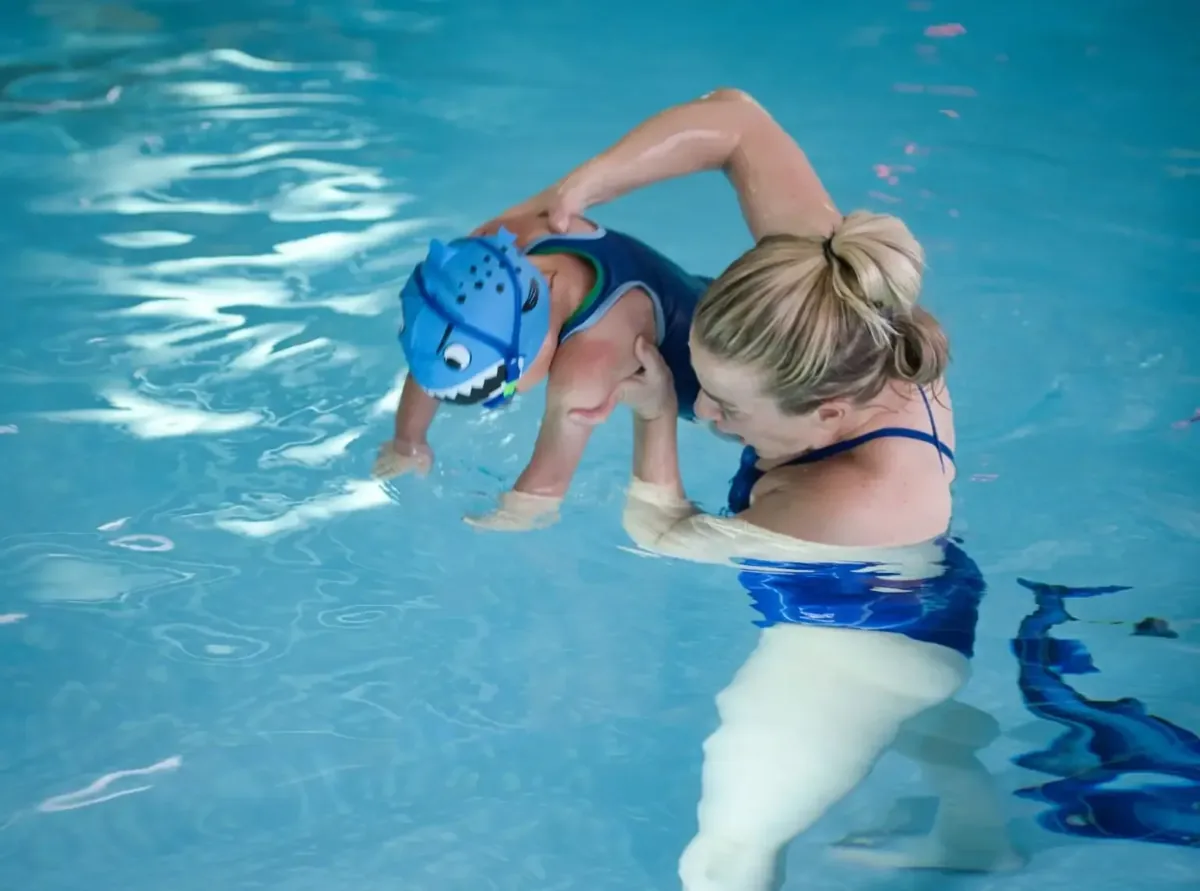
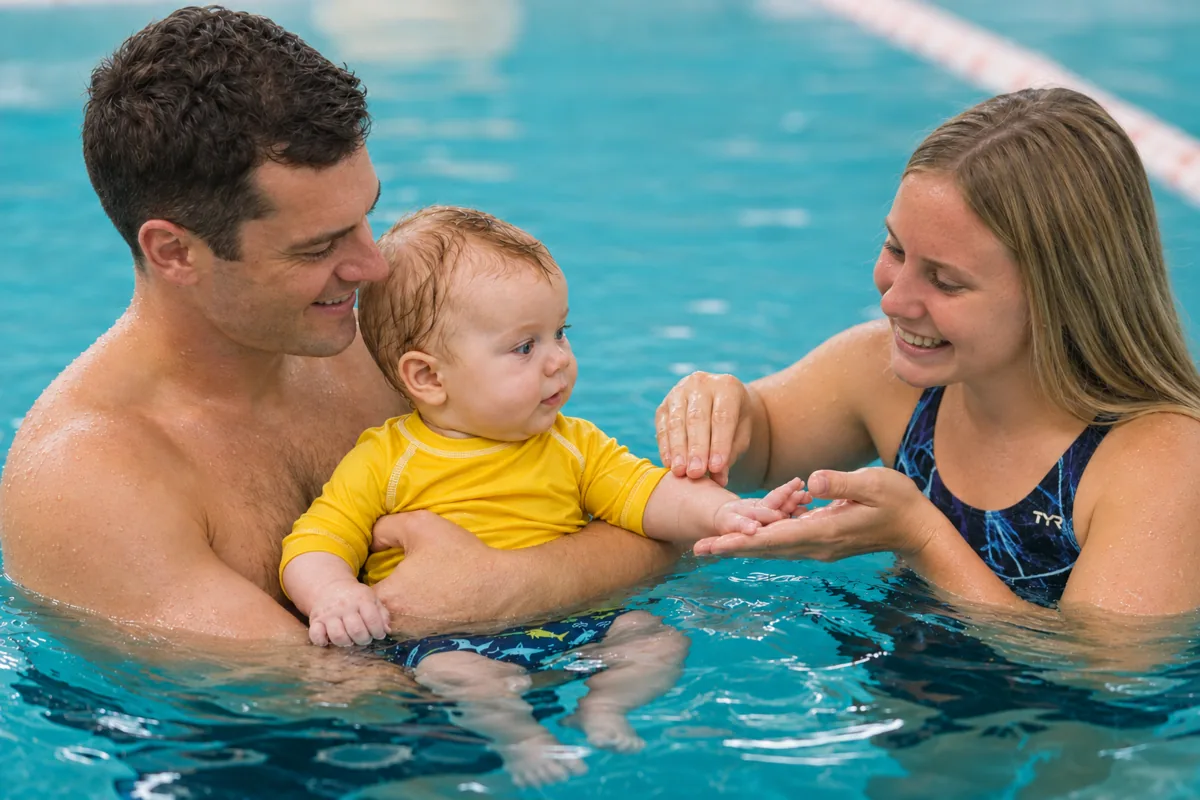
Supported water familiarity. A parent-child class can introduce the pool environment, gentle movement, and communication. Do not interpret floating or other practiced responses as reliable infant self-rescue.
Reduced fear and panic response. Children who are comfortable being splashed, submerged briefly, and supported on their backs do not freeze or thrash when surprised by water. This composure is exactly what a child needs if they slip into a pool or get caught off guard by a wave.
Improved physical development. Water resistance strengthens core muscles, builds coordination, and supports motor development in ways that land-based play cannot match. Children who swim regularly often show stronger balance and body awareness, both of which help them navigate slippery pool decks and uneven shoreline terrain.
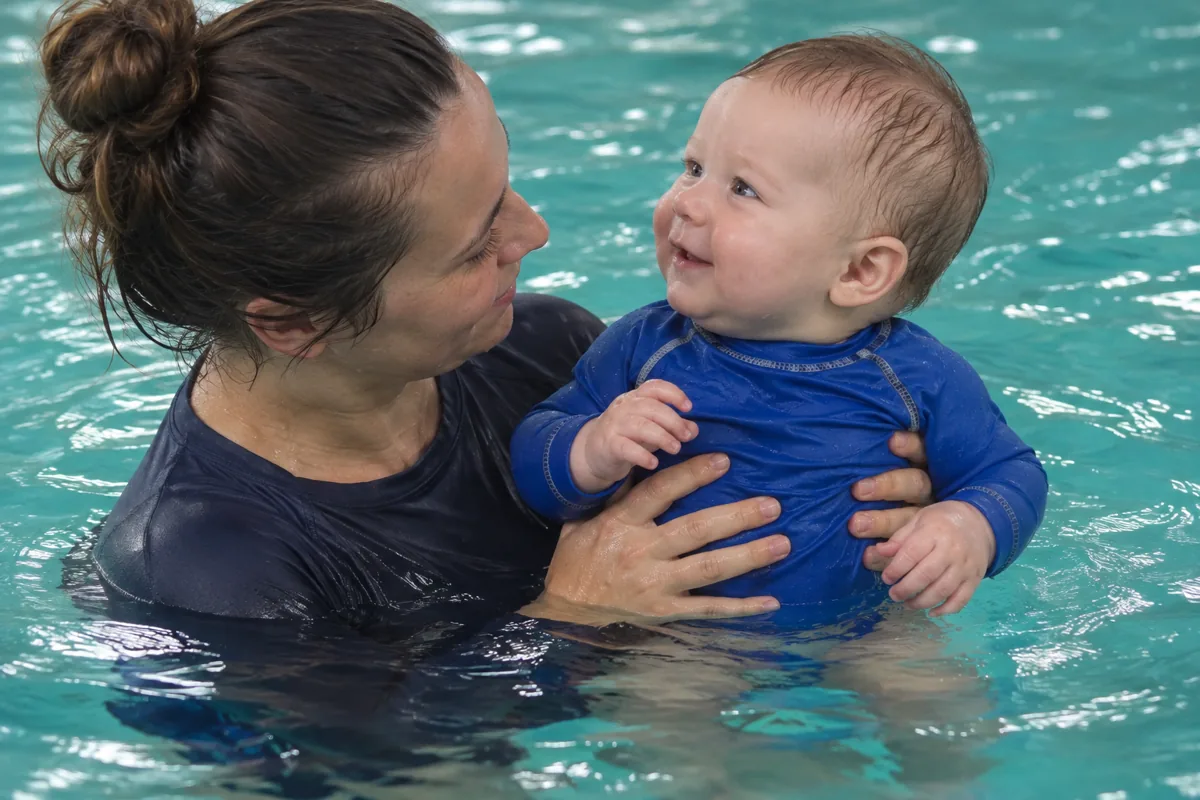
Parent education. Swim lessons are not just about the child. Instructors teach parents how to hold and support a baby in water, what to watch for during open-water play, and how to use Coast Guard approved flotation devices correctly. Many programs also reinforce the idea of designating a sober, undistracted "Water Watcher" at every gathering.
How Families Can Build on Lessons at Home
Formal instruction works best when paired with consistent reinforcement. A few simple habits can extend what your child learns in class:
Make bath time a low-pressure water introduction by pouring small cups of water over your baby's head, blowing bubbles together, and letting them splash freely. If you have access to a backyard pool or even an inflatable kiddie pool, practice supporting, floating and kicking with your child within arm's reach at all times. Read books about swimming, talk about pool rules before outings, and treat water safety as a normal, ongoing conversation rather than a one-time lecture. Please monitor your children carefully through any of these activities and drain play pools and bathtubs after use.
These small moments add up. By the time summer is in full swing, your child will feel at home in the water and you will feel more confident supervising them.
Building a Layered Approach to Water Safety
Swim lessons are one essential layer of protection, but they work best alongside other precautions. Install proper fencing around home pools, use door alarms, keep rescue equipment nearby, and never rely on flotation toys as substitutes for adult supervision. Enroll in an infant CPR course if you have not already. When these layers work together, the risk of a tragic accident drops significantly.
Start the Summer Off Right at Blue Dolphin Swim School
If you are searching for "swim lessons near me for babies and toddlers," Blue Dolphin Swim School offers expert-led infant swim programs designed to prepare your family for everything summer has in store. Our Baby Love Infant Swim classes serve families in Arvada, Broomfield, Superior, Erie, Thornton, Louisville, Lafayette, Westminster, and surrounding Colorado communities. With warm 92-degree water, small class sizes, and experienced instructors, we create a welcoming environment where babies build real skills and parents gain peace of mind.
Register today to give your child the gift of early water confidence, or visit our FAQ page to learn more about our programs.
Frequently Asked Questions
At what age can my baby start swim lessons?
Most infants can begin structured swim lessons around 4 to 6 months of age, once they have reasonable head and neck control. Programs like Baby Love Infant Swim welcome babies starting at 4 months and continue through 24 months, with curriculum tailored to each developmental stage.
Will swim lessons actually prevent drowning?
Lessons may be one layer of protection for developmentally ready children. Infant programs for babies younger than one have not been shown to lower drowning risk. Supervision, barriers, and appropriate life jackets remain essential regardless of lesson progress.
What should I bring to my baby's first swim lesson?
Most schools ask families to bring a swim diaper (reusable or disposable), a towel, a change of clothes, and any specific swimwear required by the program. Avoid regular diapers since they absorb water and lose function quickly.
My baby cries during bath time. Are swim lessons still a good idea?
Yes. Many babies who are uncertain about bath water adjust beautifully to warm pool environments, especially when lessons emphasize song, play, and gentle introductions. Skilled instructors know how to ease nervous babies into the water gradually, and parents often find that swim class actually improves bath time at home.
How long does it take to see progress?
Every child develops at their own pace. Some babies show comfort and basic skills within a few weeks, while others need a full season to build confidence. Consistency matters more than speed, and regular attendance combined with at-home practice produces the strongest results.
Do parents get in the water during infant swim classes?
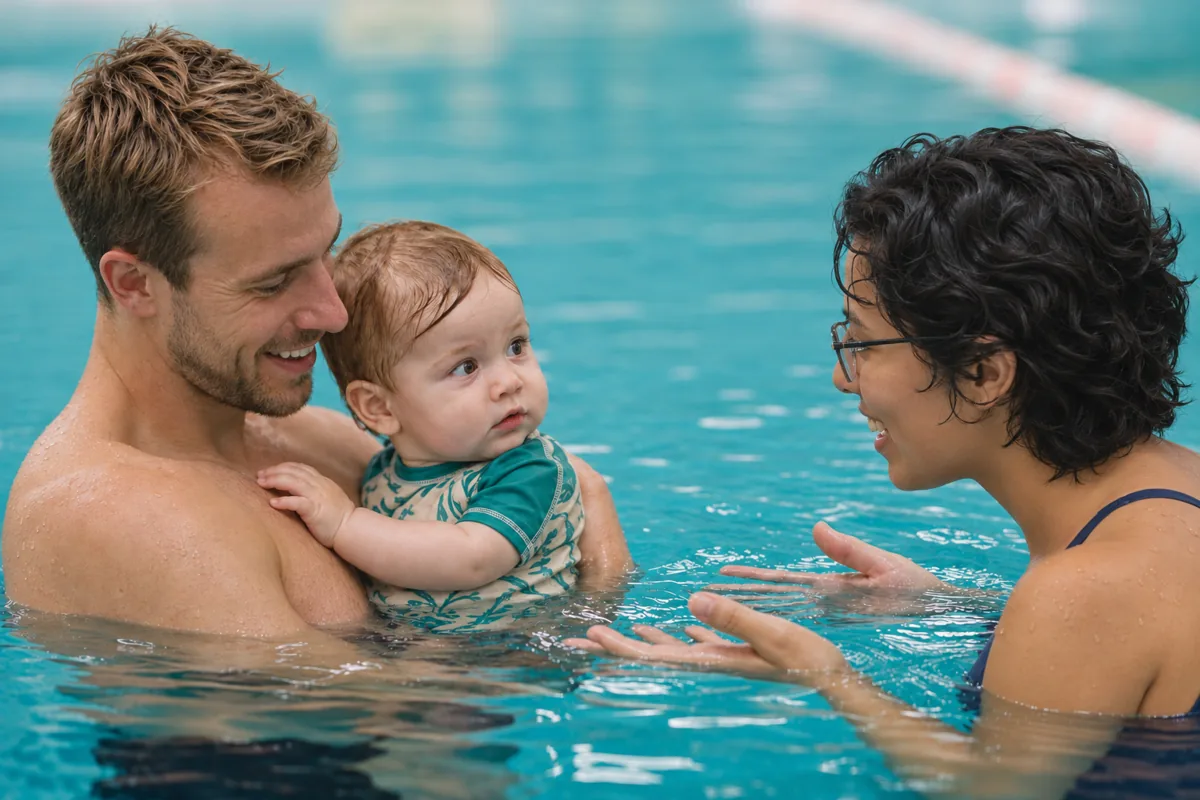
For group infant classes, yes. Parents participate directly in the water with their baby, which strengthens the parent-child bond and teaches caregivers how to handle their child safely in any aquatic setting. Private lessons may have different formats depending on the child’s age and skill level.
Further reading: AAP guidance on swim-lesson readiness and the limits of infant water play.
Pause & prepare
Take three questions to your next lesson
Think through each question and check it when you have something to discuss. This is a conversation prompt, not a readiness test.
0 of 3 questions considered