Infant Swim Lessons: Movement, Play, and Early Development
4 min read
By Blue Dolphin Swim School
Your learning focus
A clearer picture before the next step.
Explore supported movement and shared play in infant swim classes, with realistic expectations about development.
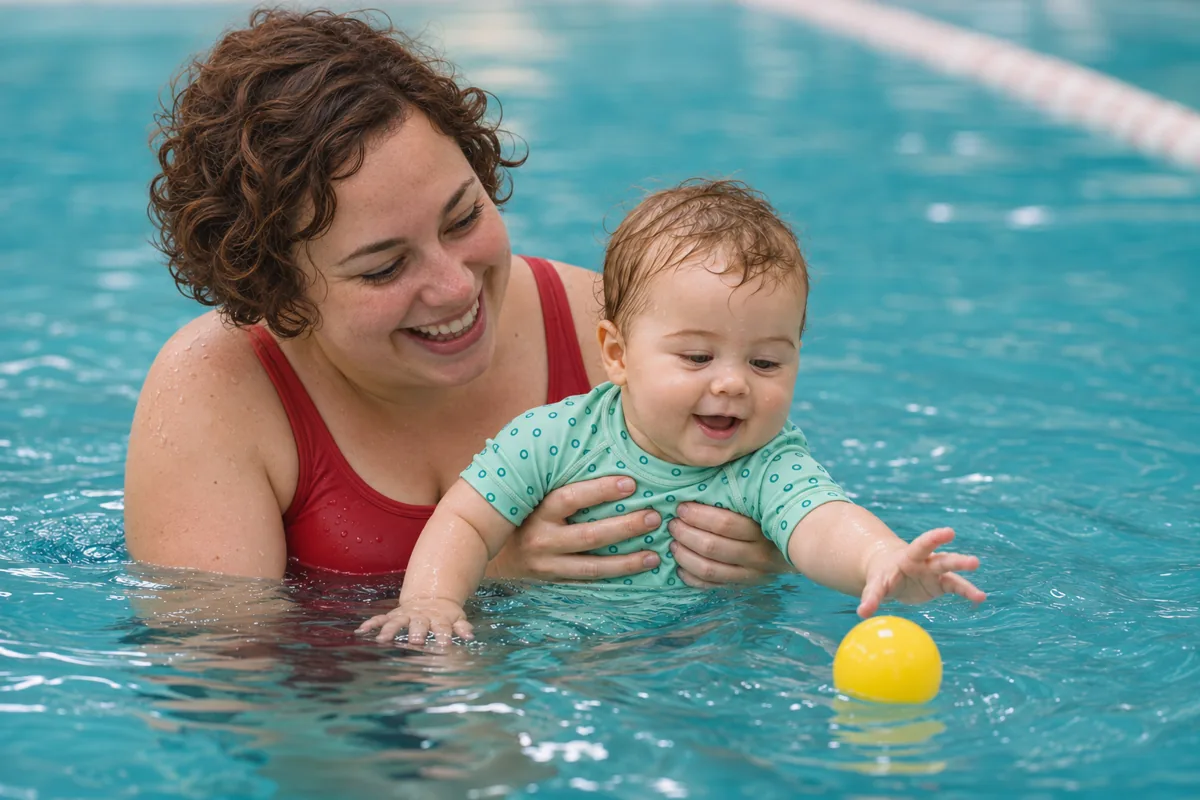
Infant classes can offer supported movement, play, and shared attention. These are reasons to explore the experience without promising accelerated brain development or earlier motor milestones.
Babies develop through many daily experiences. Water play is one optional activity, and its suitability depends on the child's current abilities and comfort. Discuss developmental concerns with your pediatrician.
At Blue Dolphin Swim School, our Baby Love Infant Swim program is designed to promote safety, confidence, and healthy development in age-appropriate ways.
The Water Environment: A Unique Developmental Setting
Water offers something land cannot: buoyancy and gentle resistance at the same time.
On land, babies are limited by gravity. In the pool, buoyancy allows them to move their arms and legs more freely, experimenting with coordinated motion before they can fully do so on solid ground. At the same time, water provides natural resistance, which strengthens muscles and encourages controlled movement.
This combination supports:
Improved coordination
Better balance
Stronger core, arm, and leg muscles
Enhanced body awareness
These early physical skills create the foundation for milestones like rolling, sitting, crawling, and eventually walking.
Exploring Coordinated Movement
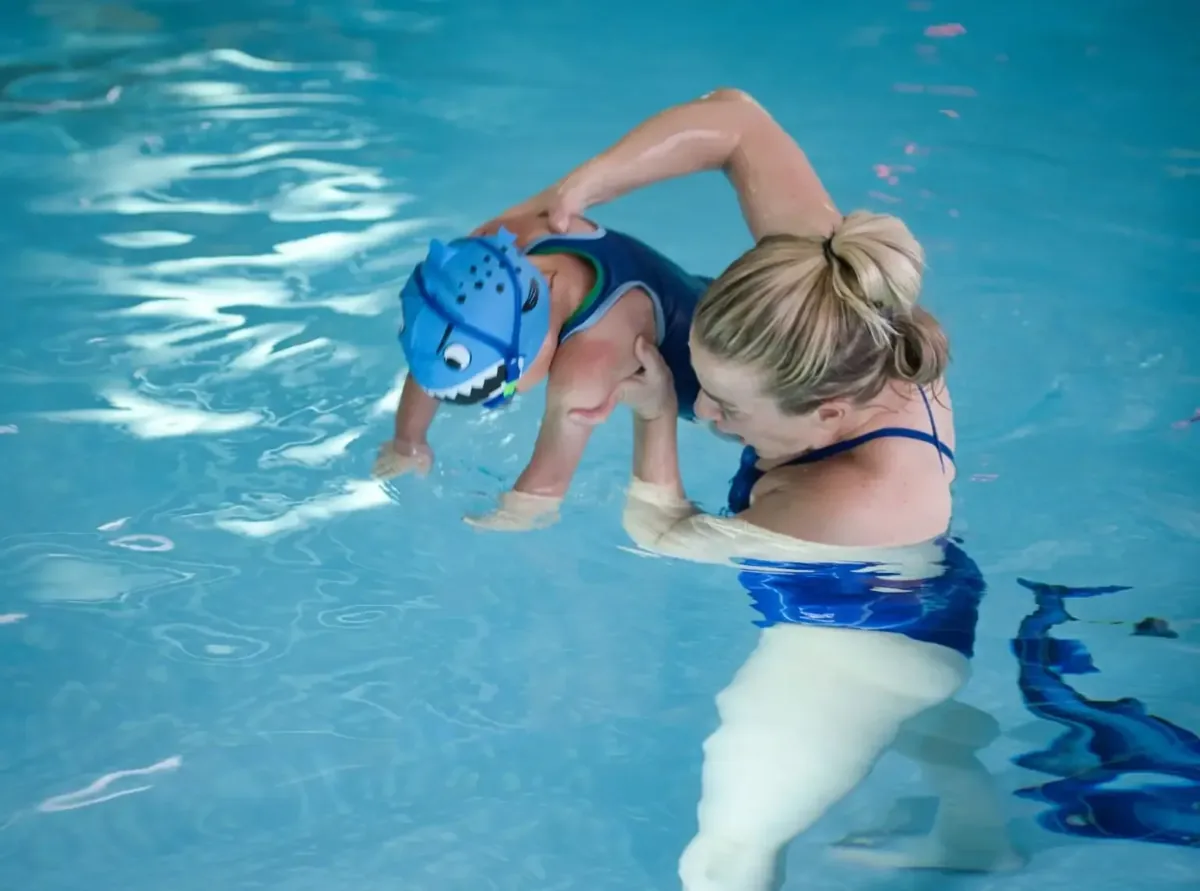
One of the most important aspects of infant swim lessons is cross-lateral movement—when babies use both sides of their bodies in coordinated patterns.
For example:
Rolling from front to back
Reaching across the body during supported glides
Monkey walking on the wall after learning how to hold the wall for 5 seconds independently
Coordinated movement involves both sides of the body. Supported reaching or kicking is an opportunity for play, not proof that swimming strengthens particular brain pathways or causes faster development.
Associations reported in developmental research do not establish that swimming caused a difference. Families should not expect improved school performance or earlier milestones from infant classes.
Strengthening Gross and Fine Motor Skills
Infant swim lessons primarily target gross motor development—the large muscle movements of the arms, legs, and core. But they also contribute to fine motor growth in subtle ways.
Gross Motor Benefits:
Stronger neck and trunk control
Improved posture and stability
Better coordination between limbs
Fine Motor Benefits:
Gripping toys during water activities
Hand-eye coordination during guided movement
Improved body control and timing
These skills lay the groundwork for future tasks like feeding independently, grasping objects, writing, and participating in sports.
A Sensory-Rich Setting for Play
The pool is a multi-sensory environment. Babies experience:
The feel of water against their skin
The sound of splashing and instructor cues
Visual tracking of movement
Changes in body position
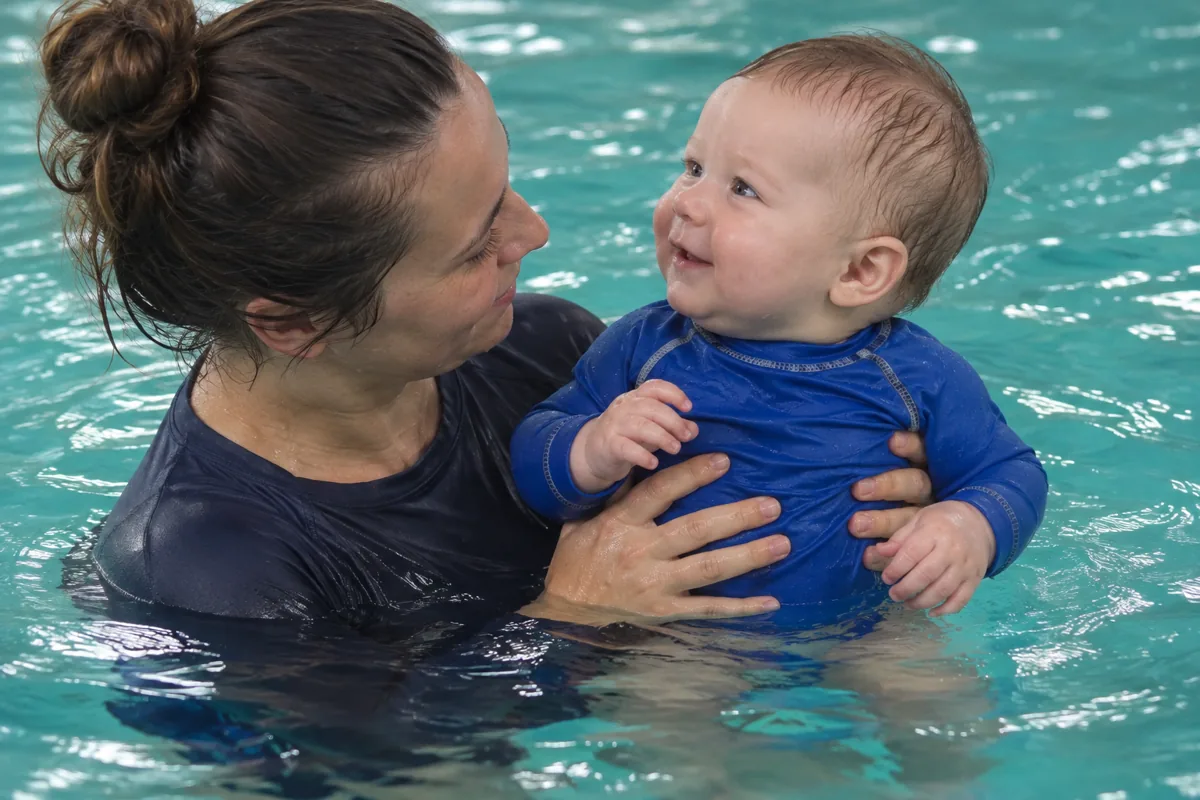
The sights, sounds, and movement can make the pool engaging. Watch the baby's reactions and keep the activity comfortable rather than treating sensory input as a clinical intervention.
Swimming is not an academic shortcut. Enjoy the shared activity without using it to predict spatial reasoning, mathematics, memory, or future classroom performance.
Emotional Regulation and Confidence
Brain development isn’t only cognitive—it’s emotional.
Learning to manage new sensations, regulate breathing, and trust an instructor helps babies build emotional resilience. Repetition in swim lessons teaches predictability, which lowers stress responses and builds confidence.
Over time, babies who become comfortable in the water often show:
Increased independence
Better adaptability to new environments
Improved self-regulation
These traits support both early childhood development and long-term learning readiness.
The Importance of Consistency
A predictable routine may help a baby recognize what happens next. Attendance should suit the family and the child's comfort, rather than a promised neurological benefit.
At Blue Dolphin Swim School, we emphasize:
Structured, progressive instruction
Safe, warm water environments
Developmentally appropriate pacing
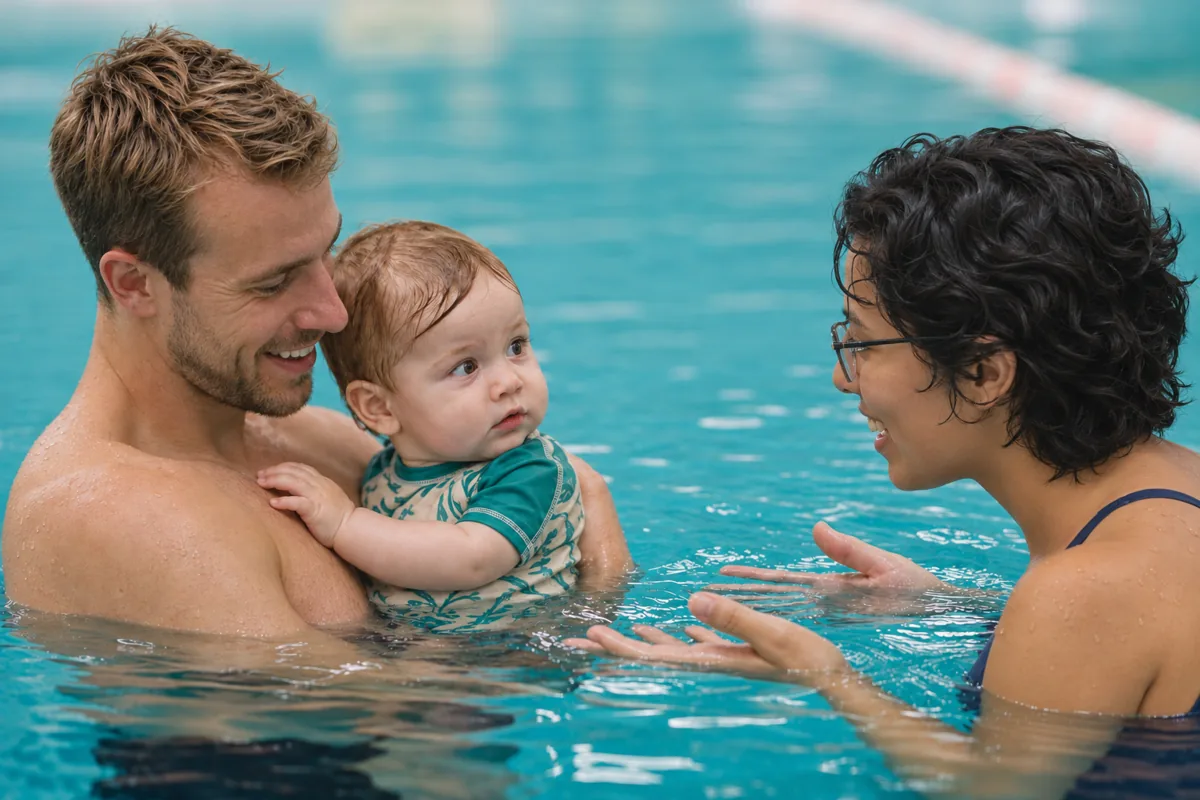
Parent involvement and support
The goal is a positive, supported relationship with water, with activities appropriate to the child's current abilities.
A Foundation for Lifelong Skills
Infant swim lessons are not about producing advanced swimmers at an early age. They’re about building:
Water safety awareness
Strong motor foundations
Shared attention and age-appropriate play
Confidence in movement
When babies experience guided, supportive swim instruction, they gain more than just water comfort—they build skills that contribute to their overall growth.
Give Your Baby a Strong Start
If you’re looking for a safe, structured way to support your baby’s physical and cognitive development, Blue Dolphin Swim School is here to help.
Our Baby Love Infant Swim program focuses on water safety, confidence, and age-appropriate motor development—led by trained instructors who understand early childhood growth.
Visit Blue Dolphin Swim School today to learn more or enroll your baby in infant swim lessons. Help your child build strength, confidence, and healthy development from the very beginning.
FAQ: Infant Swim Lessons and Development
Can swim lessons really support brain development?
Infant swimming should not be promised to improve brain development. Supported play can be enjoyable, but it is not a substitute for a pediatric developmental assessment.
Will swimming help my baby walk sooner?
Children reach motor milestones at different rates. Do not use swim attendance to predict earlier crawling or walking; talk with your pediatrician about development.
Are swim lessons safe for babies’ developing brains and bodies?
When conducted in a properly supervised, warm, and structured environment by trained instructors, infant swim lessons are developmentally appropriate and safe.
How often should my baby attend lessons for developmental benefits?
Consistency matters. Regular weekly lessons help reinforce motor patterns and build confidence.
Do infant swim lessons replace other developmental activities?
No. Swim lessons complement tummy time, play, and other activities that support healthy growth.
Further reading: AAP guidance on swim-lesson readiness and the limits of infant water play.
Pause & prepare
Take three questions to your next lesson
Think through each question and check it when you have something to discuss. This is a conversation prompt, not a readiness test.
0 of 3 questions considered