Tiny Swimmers, Big Benefits: Why Baby Swim Lessons Matter
4 min read
By Blue Dolphin Swim School
Your learning focus
A clearer picture before the next step.
At Blue Dolphin Swim School, our swim curriculum is designed to help your baby grow stronger, gain confidence, and begin their swimming journey with safety and joy. Here’s why baby swimming lessons are more than just play—they're a foundation for essential life skills. Browse the website for more details.
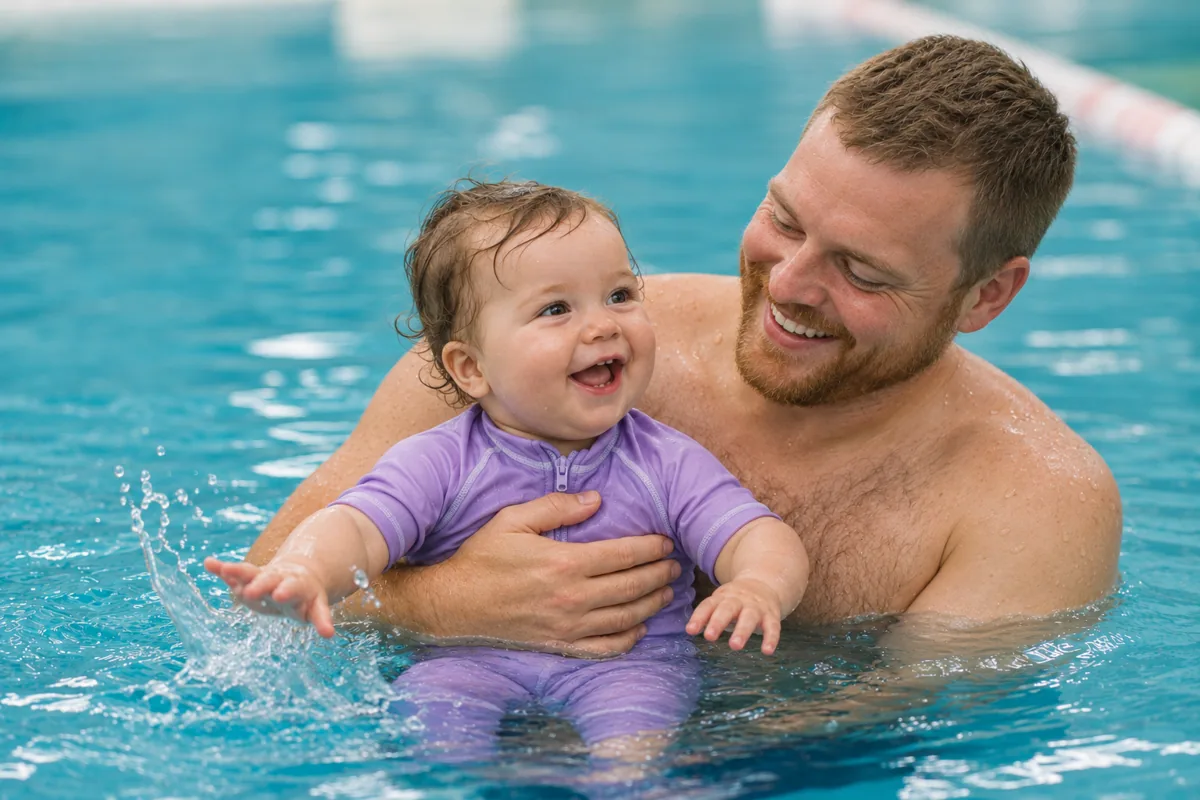
Swimming with your baby can be a chance for supported play and shared attention. Choose activities according to your baby’s comfort and readiness rather than expecting medical or academic benefits.
At Blue Dolphin Swim School, our swim curriculum is designed to help your baby grow stronger, gain confidence, and begin their swimming journey with safety and joy. Here’s why baby swimming lessons are more than just play—they're a foundation for essential life skills.
Physical Development Starts Early
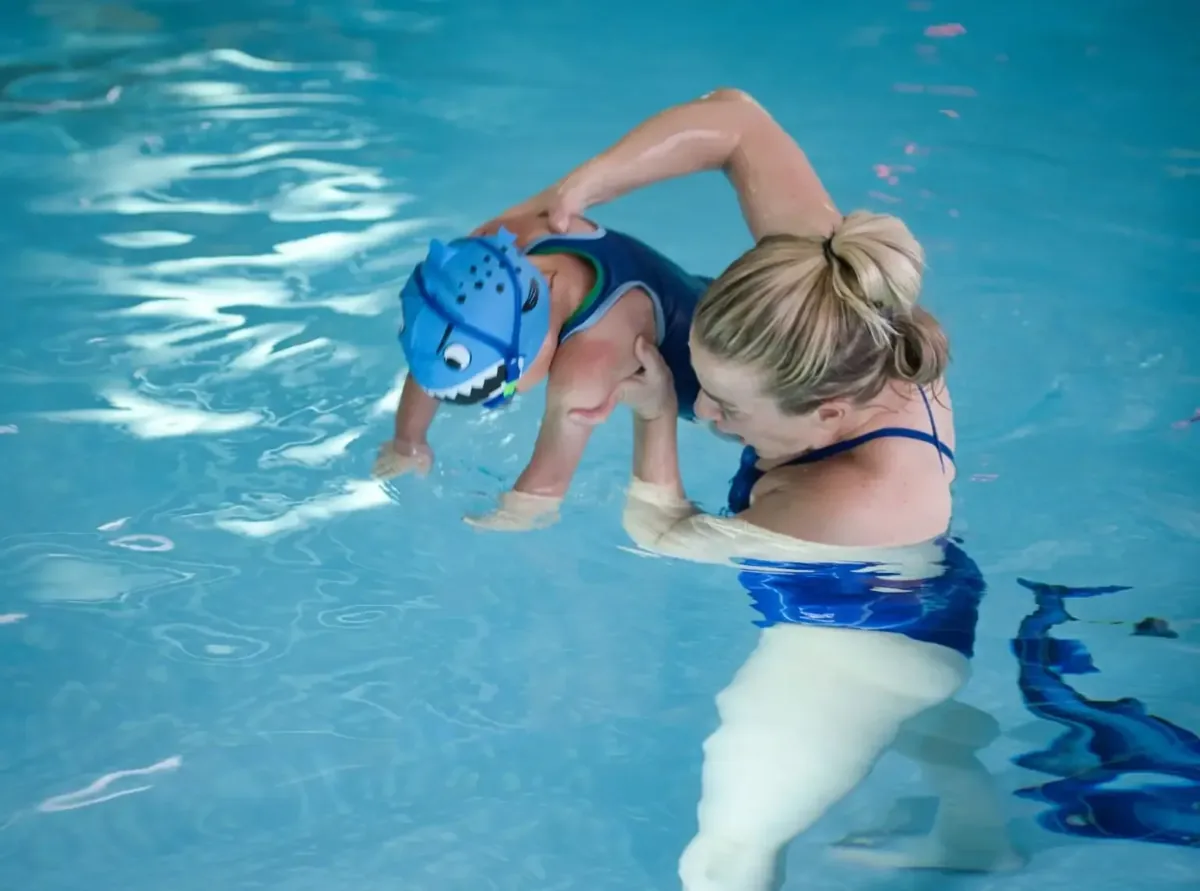
One of the key benefits of baby swimming is how it supports early muscle development and muscle strength. The swimming motion your baby makes in water works their neck muscles, arms, and core—even before they’ve learned to crawl. These movements build basic motor skills and even help develop finer motor skills that are important later in life.
Water provides buoyancy and resistance during supported play. Children develop at different rates; swimming should not be presented as a way to make a baby sit, crawl, or walk earlier.
Engaging Play Without Developmental Promises
Songs, movement, and interaction can make a lesson engaging. They are not proof of improved brain function or new cognitive abilities caused by swimming.
Enjoy the shared experience without expecting changes in language, literacy, mathematics, or school readiness. Discuss developmental questions with your pediatrician.
Builds Water Confidence and Reduces Fear
Introducing babies to bodies of water early helps reduce fear later in life. Familiarity with the water surface, sounds, and sensations of pool water encourages comfort and enjoyment—especially when lessons include skin contact with a parent.
Reflex movements are not independent swimming or reliable airway protection. Discuss readiness with your pediatrician; no particular birthday makes pool infection risks disappear.
Children who miss these early experiences can become fearful or hesitant around water. That’s why consistent exposure through baby swimming lessons or bath time water play is so important.
Water Safety and the Limits of Infant Lessons
For babies younger than one, infant swim programs have not been shown to reduce drowning risk. Parent-child water play is about supported familiarity and shared enjoyment.
The American Academy of Pediatrics recommends touch supervision for children under 4, meaning an adult should always be within arm’s reach. Even a single inch of water can be dangerous, so constant vigilance is key. Always use life jackets around open bodies of water, and never substitute inflatables for proper safety gear.
Lessons should never replace supervision—but they can help your baby learn how to behave around a body of water and respond to water-related challenges.
Encourages Emotional and Social Growth
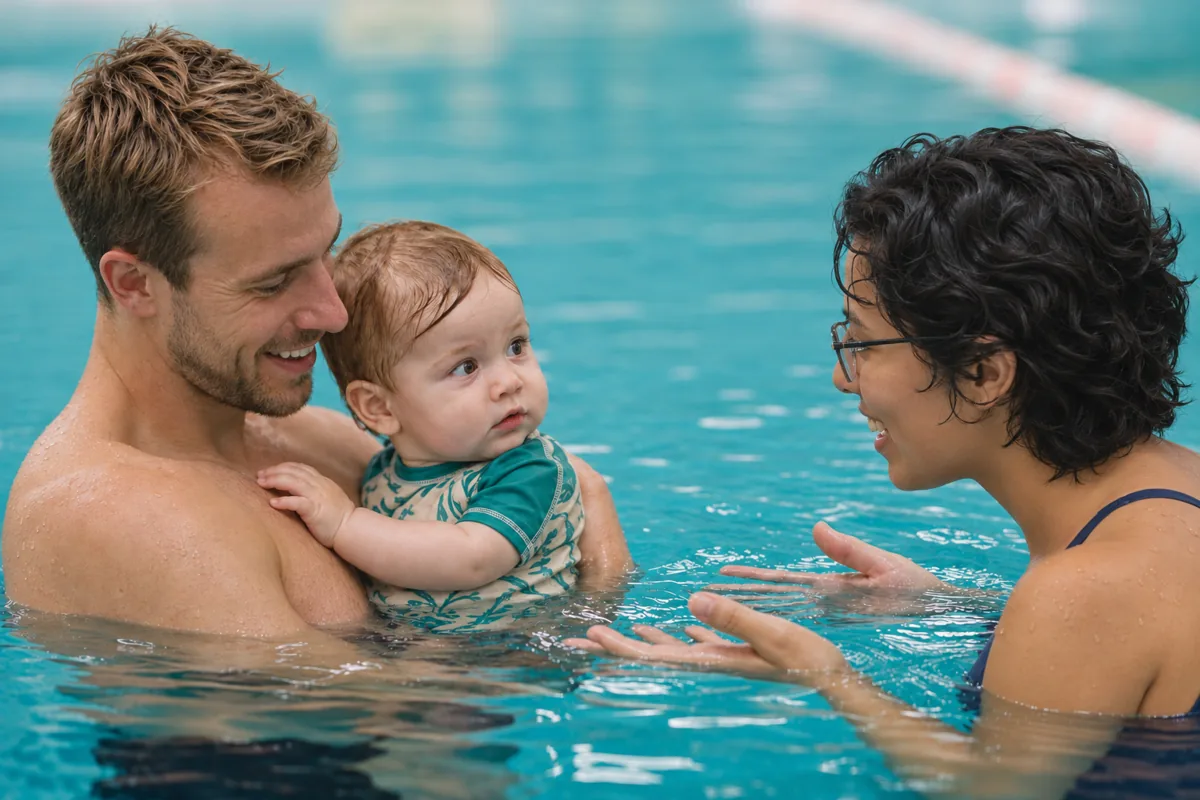
At Blue Dolphin, our program is built around parent participation, bonding, and play. Classes include songs, gentle movement, and even elements of traditional swimming techniques to support early confidence.
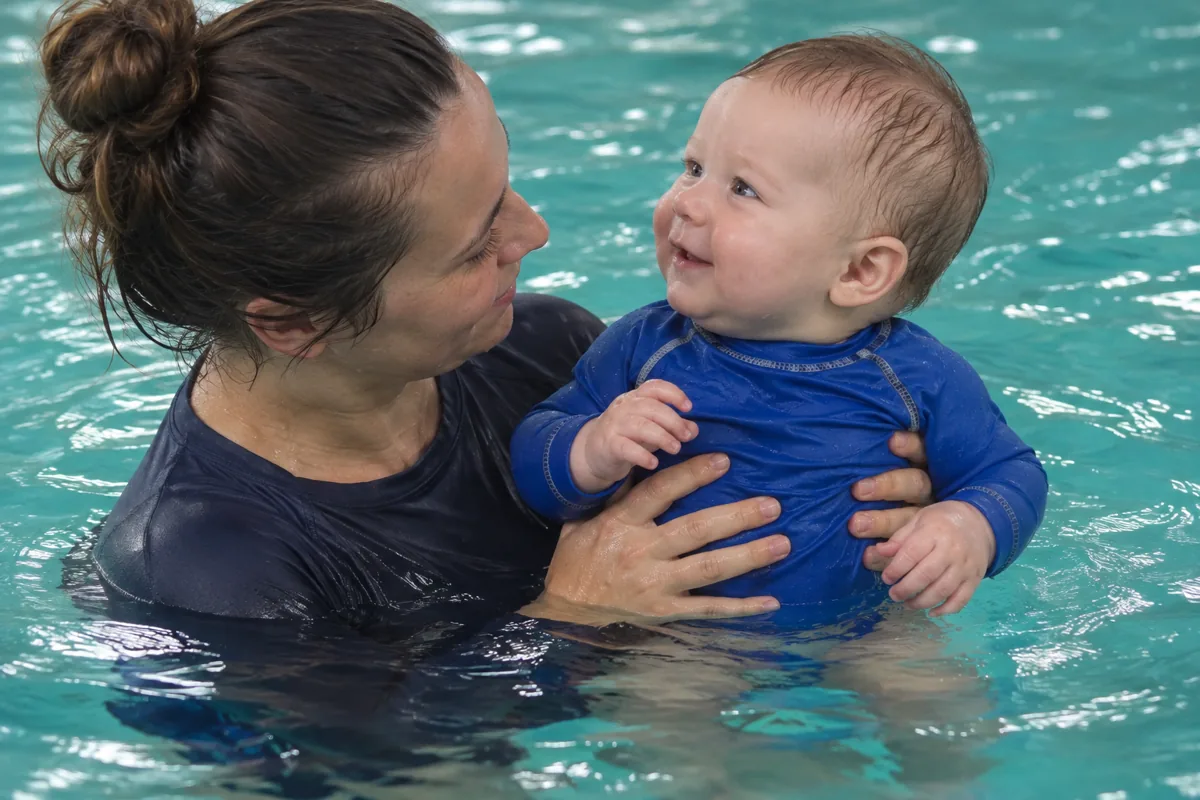
The combination of undivided attention, skin contact, and shared joy makes baby swimming a wonderful opportunity to bond. It’s also a unique way to introduce babies to group settings, helping them begin to follow instructions and socialize.
Whether it’s in a swimming pool, a water park, or just enjoying pool time together, your baby is developing confidence, independence, and a love for water activities that can last a lifetime.
Allow Time for Rest and Normal Routines
Responses after pool time vary. Allow time for rest and normal feeding routines, without expecting improved sleep or appetite from infant swimming.
Coughing, gagging, and breathing distress are not learning milestones to normalize. Stop the activity and get appropriate help. Seek emergency assistance when breathing is difficult or a child is unresponsive.
What You’ll Need
Before starting, talk to your pediatrician about readiness and confirm program requirements. Use required swim diapers and ask about water quality and supervision.
Start Your Baby's Swimming Journey with Blue Dolphin Swim School
Blue Dolphin’s Baby Love Infant Swim page lists options for babies and toddlers aged four to twenty-four months. Confirm current requirements and appropriate placement with the school.
With a curriculum built around early development and parent bonding, our experienced instructors help babies thrive in the water and beyond. Whether your goal is improved coordination, early water safety, or just making memories, we’re here to guide you every stroke of the way.
Ready to dive in?
https://www.bluedolphinswimschool.com/contact/. Let’s make your child’s swimming journey a joyful and safe one—right from the start.
Further reading: AAP guidance on swim-lesson readiness and the limits of infant water play.
Pause & prepare
Take three questions to your next lesson
Think through each question and check it when you have something to discuss. This is a conversation prompt, not a readiness test.
0 of 3 questions considered