The four swimming strokes, explained for parents
A plain-language guide to freestyle, backstroke, breaststroke, and butterfly, with questions to ask your child’s instructor.
What are the four competitive swimming strokes?
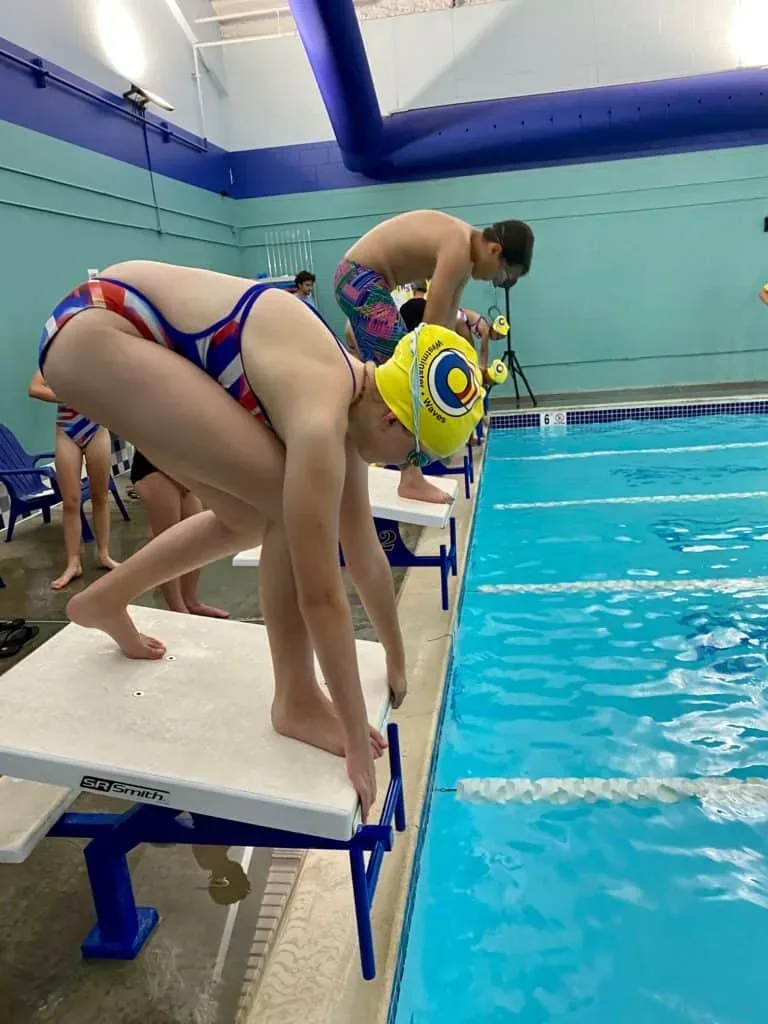
The four strokes are freestyle, backstroke, breaststroke, and butterfly. Each involves a different combination of body position, arm action, leg movement, and breathing. In ordinary lessons, freestyle usually refers to front crawl. Learning their names helps parents understand coaching feedback without needing to turn every lesson into a technical assessment.
Get to know the movement
Four strokes. Different ways to move.
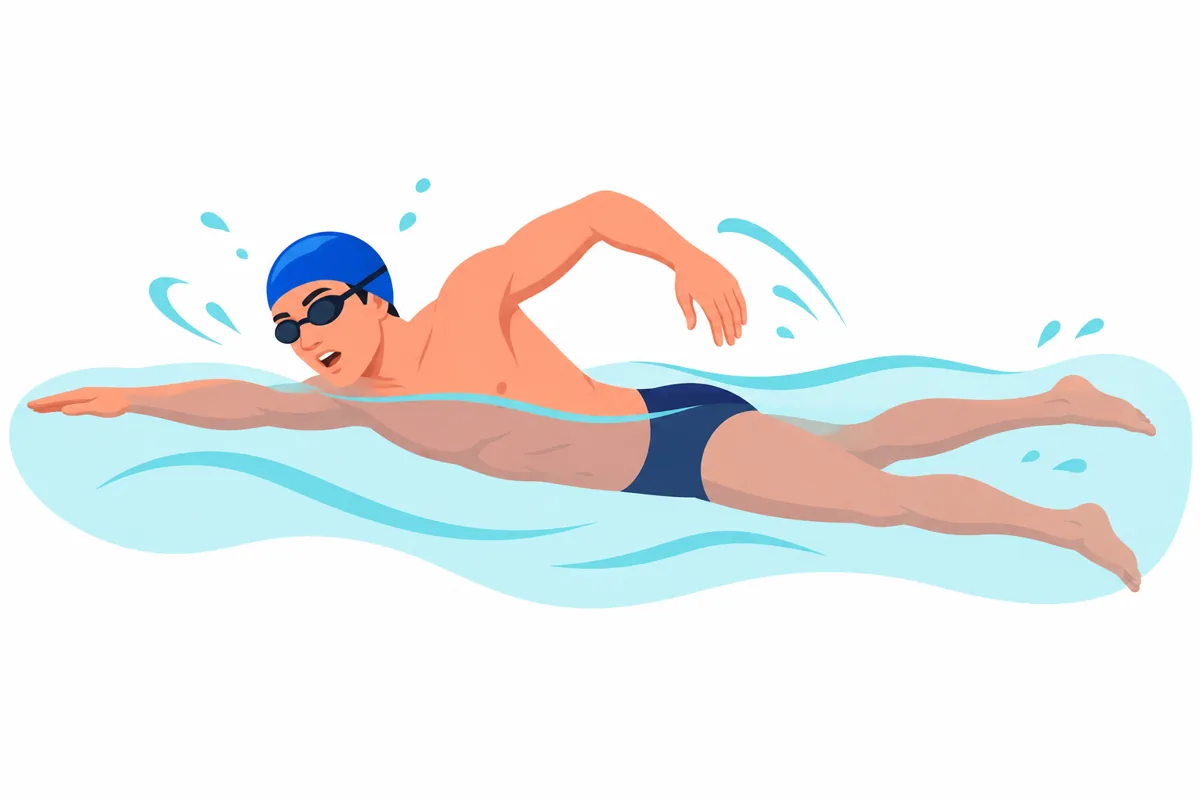
Freestyle
- Body position
- Facing down
- Movement pattern
- Alternating arms
Ask how breathing and body position work together.
Read the stroke introductionConceptual illustrations introduce stroke vocabulary. They are not technical drills or an assessment of swimming ability.
How do freestyle and backstroke differ?
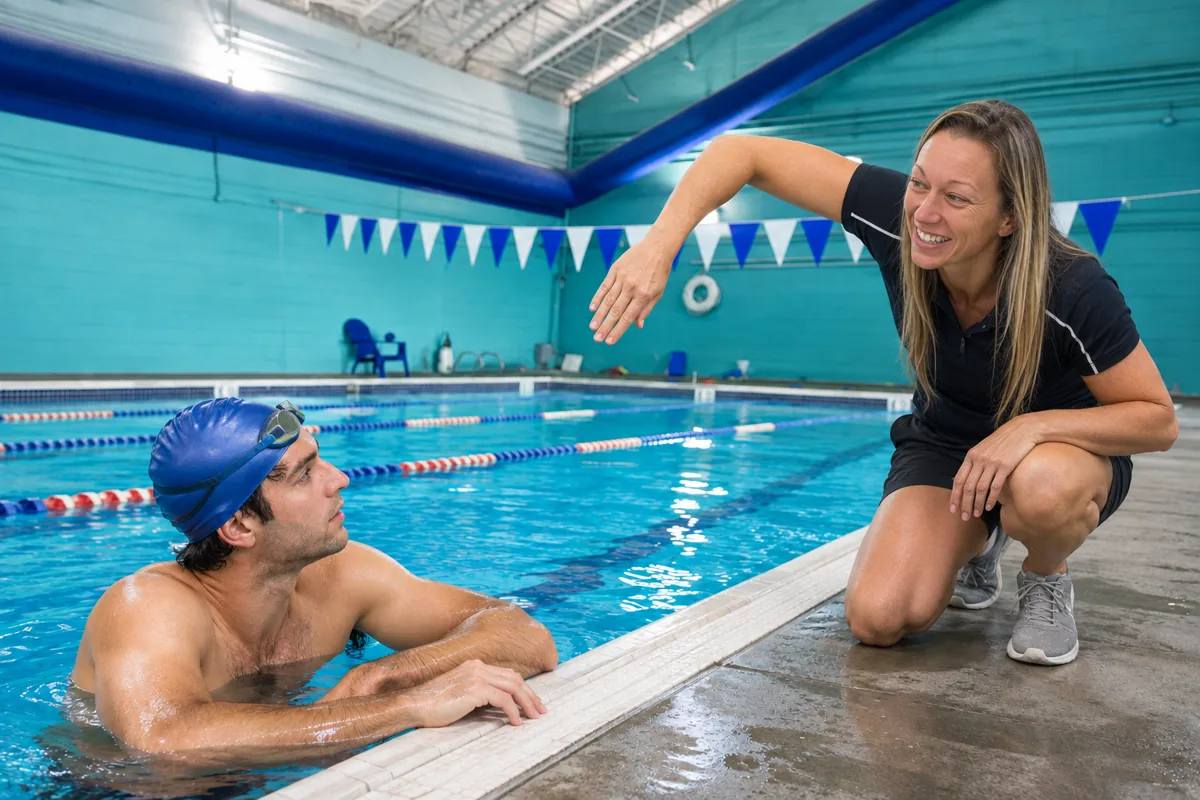
Front crawl is swum facing down, with alternating arms and breathing coordinated with the stroke. Backstroke is swum facing up with alternating arms. A swimmer may feel more comfortable with one position than the other. Ask the instructor which aspect of balance, breathing, or coordination is the current focus.
- Notice what feedback the instructor gives rather than timing every length.
- Ask how a swimmer’s body position changes when they become tired.
- Use the coach’s terminology when discussing the lesson afterward.
What makes breaststroke and butterfly different?
Breaststroke moves both arms together and uses a symmetrical kick that sweeps outward and back before the legs close. Butterfly brings both arms forward over the water together, with the legs moving together in a dolphin kick. Both differ from front crawl’s alternating action. Ask an instructor to explain timing before attempting technical drills.
Does a child need all four strokes before moving up?
That depends on the program and level. Blue Dolphin’s Intermediate and BD Elite pages describe different skill expectations, so a single generic milestone list cannot determine placement. Ask the instructor which skills should be consistent, which are still being introduced, and how readiness is assessed for the next group.
Pause & put it together
A quick learning check.
Questions you might have
Is butterfly always the last stroke taught?
There is no universal lesson order. Schools and coaches choose progressions for their swimmers and curriculum.
Does a familiar-looking stroke count as legal in a meet?
Competition rules are more specific than an introductory explanation. A coach should verify the current USA Swimming rules and amendments for the event.