How can I stop crossing over in freestyle?
Diagnose common causes of crossing over in freestyle (hand entry, shoulder rotation, breathing) and a short progression of drills, cues, and set structures to retrain a straighter pull and cleaner catch.
Updated
why crossing over happens: the mechanics behind the error
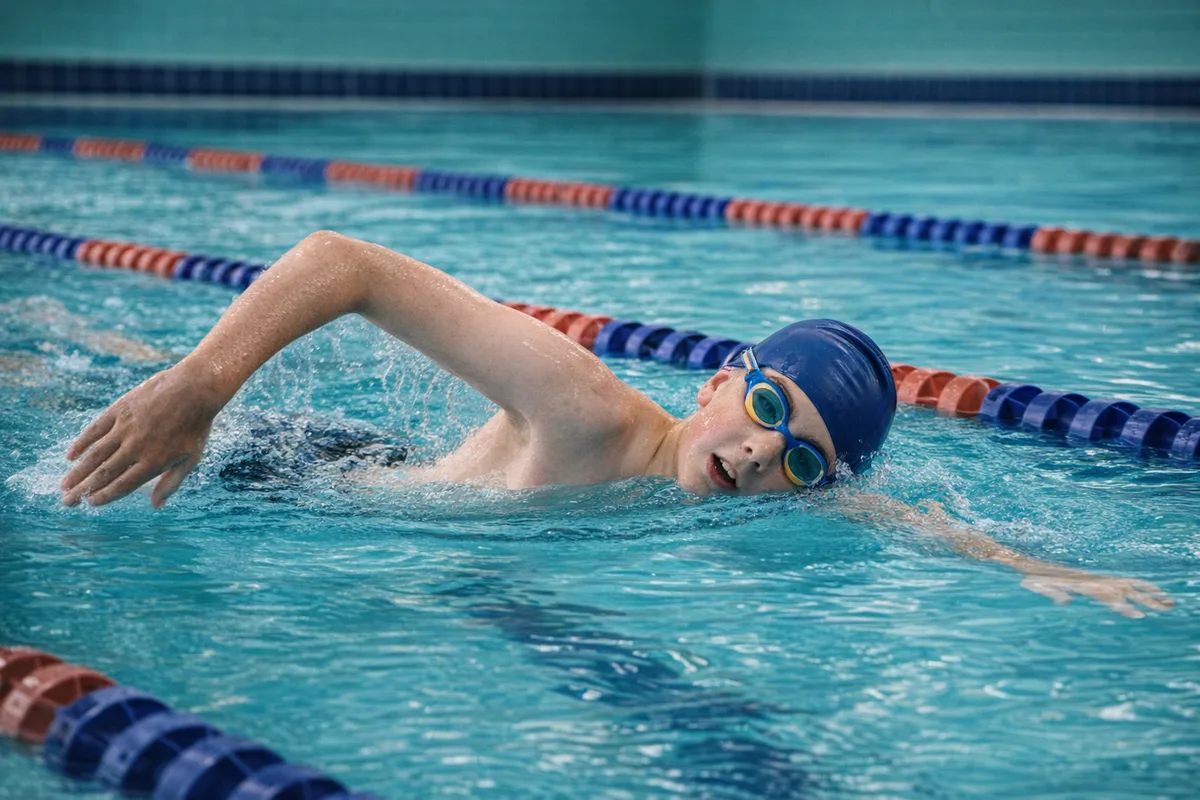
crossing over is a lateral deviation of the hand path toward the body's centerline during entry and catch. it commonly appears when multiple factors interact: the entry line is biased inward, torso rotation is delayed or asymmetrical, or breathing actions alter shoulder position and balance. identifying which of those factors is dominant helps the instructor choose targeted feedback and a sensible drill progression.
- hand-entry problems: wide or inside-first entries that aim toward the centerline rather than straight forward
- insufficient or asymmetrical body roll that forces the recovering or pulling arm to compensate
- breathing-related effects: head/shoulder movement with the breath that changes shoulder position and the hand path
- poor early catch: reaching with an extended straight arm instead of establishing an early vertical forearm (EVF) can shift the effective pull and lead to cross-path recovery
how to diagnose your crossover pattern in practice
use repeatable observations and simple isolations to see whether the entry line, torso rotation, or breathing-related movement is the primary contributor. rely on video or a coach’s external view where possible, and break the stroke into parts so the swimmer and coach can compare how the arm behaves under different constraints. frame each test as an experiment and watch for consistent changes across repeats.
- record short swims from above and beside the pool to capture entry, recovery, and shoulder roll
- perform single-arm freestyle on each side (with normal breathing) to reveal side-to-side differences in path and rotation
- observe the swimmer’s hand path when they breathe in their usual pattern versus when they breathe on the other side; note whether the entry shifts toward the centerline
- use catch-up or fingertip-drag variations to separate entry timing from pull shape and to reveal whether timing or body roll is driving the cross-path
Get to know the movement
Four strokes. Different ways to move.
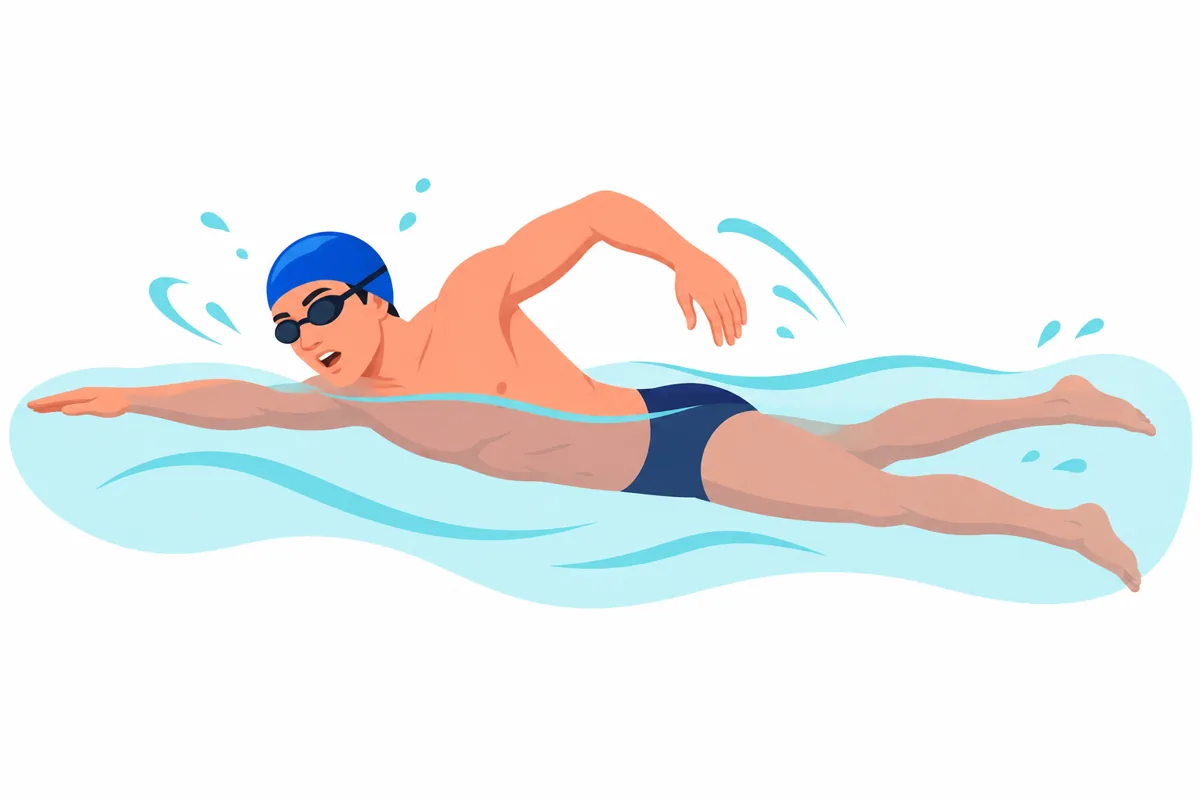
Freestyle
- Body position
- Facing down
- Movement pattern
- Alternating arms
Ask how breathing and body position work together.
Read the stroke introductionConceptual illustrations introduce stroke vocabulary. They are not technical drills or an assessment of swimming ability.
short drill progression to retrain a straighter pull and cleaner catch
offer a progression that isolates components of the stroke and lets the swimmer experience a straighter path before reintroducing full stroke dynamics. start with low-speed shape drills, then add patterns that encourage an early vertical forearm and a more inline recovery, and finally reintegrate the stroke while keeping the focus narrow. let the swimmer and coach agree on which cue to emphasize each rep.
- catch-up drill at slow tempo — focus: separate entry timing so the swimmer notices the hand meeting in front
- fingertip-drag on recovery — focus: keep the recovery path close to the body to reduce wide recoveries
- zipper-recovery (thumb-to-hip/tracing the side) — focus: promote a recovery line that re-enters more in front of the shoulder
- single-arm freestyle with a buoy or support — focus: concentrate on early vertical forearm (EVF) and a straight back-pull on each side before adding the other arm
- early-vertical-forearm sculling and feel drills — focus: help the swimmer sense a narrower rearward pressure path rather than a sweeping cross-path
practice sets and session structures to reinforce the new pattern
structure sessions to alternate focused, short drill repetitions with reintegration swims that let the swimmer test the corrected pattern at varying speeds. keep each repetition intentionally short so attention stays on the technical goal. add progressive complexity—more rhythm, more tempo, or more continuous strokes—only as the pattern holds. use video or specific coach observations after blocks so the swimmer receives clear, timely feedback.
- warm-up: begin with easy, controlled swimming and a few short drill repetitions that rehearse the desired entry line
- technical block: mix short drill reps with immediate short swims to reapply the corrected shape (keep reps short and focused on feel)
- integration swims: reintroduce full-stroke rhythm at conversational or controlled speeds while the swimmer concentrates on one cue at a time
- alternation approach: rotate between an isolated drill rep and a short full-stroke rep so the swimmer practices transfer from drill to stroke
- cool down: finish with relaxed swimming and a few easy shape reminders so the session ends with the new pattern in a low-stress context
coaching cues and the common errors to watch for
use brief, focused cues that target a single element each rep. avoid overloading the swimmer with multiple corrections at once. when an error returns, step back to simpler drills and pose diagnostic questions rather than immediately prescribing more volume. keep feedback concrete and anchored to a single feeling or reference point.
- simple cues: 'reach straight', 'lead with elbow', 'finish to the hip', 'rotate, don’t reach'
- error: entering inside-first or crossing the midline — coaching prompt: ask the swimmer to slow the recovery and re-enter under visual or tactile guidance
- error: late or absent rotation on one side — coaching prompt: use single-arm reps and side-by-side observation; ask what the swimmer feels in the torso
- error: flat-hand or straight-arm early in the pull — coaching prompt: return to EVF sculling and ask the swimmer to describe the water pressure they feel before the pull
- error: recovery elbow too low or too wide — coaching prompt: use fingertip-drag or zipper-inspired recoveries and have the swimmer compare the feel of a narrower line
Pause & put it together
A quick learning check.
Questions you might have
how do i know whether entry, rotation, or breathing is causing my crossover?
approach the problem like a small series of tests and compare how the stroke changes. ask the coach to help record side and above views, then try single-arm reps to expose side-to-side differences, catch-up or fingertip-drag to isolate entry timing, and breathing-variation observations (for example: breathing to each side under normal respiration) to see whether the entry path shifts. use the footage and conversation to decide which factor is dominant rather than assuming a single cause.
which drill should i start with if i'm not sure where to begin?
catch-up and fingertip-drag are useful, low-complexity starting points because they reveal entry timing and recovery path without adding rotation or complex coordination. begin these drills at slow speed and check with a coach or video so you can see whether the hand path or timing changes before trying more complex progressions.
how often should i practice these drills in a session?
prioritize short, focused repetitions within your existing practice plan rather than long blocks of unfocused drill. discuss with your coach how to integrate technical blocks into your weekly training: the emphasis should be on attention, correct feel, and quality feedback rather than a fixed number of sessions or high volume of repetitions.
will fixing crossover affect my speed?
changes in hand path and catch mechanics often change the swimmer’s feel and timing. some swimmers notice a temporary loss of perceived speed while a new pattern is consolidating; others notice more direct pulls right away. use objective measures (video, coach observation) to judge whether the stroke’s efficiency and consistency improve over time, and discuss performance expectations with your coach.